Why do I sometimes hear ringing in my ears, especially when I drink alcohol?
---asks Anonymous from New York, NY.
Sabina Borza • August 28, 2006
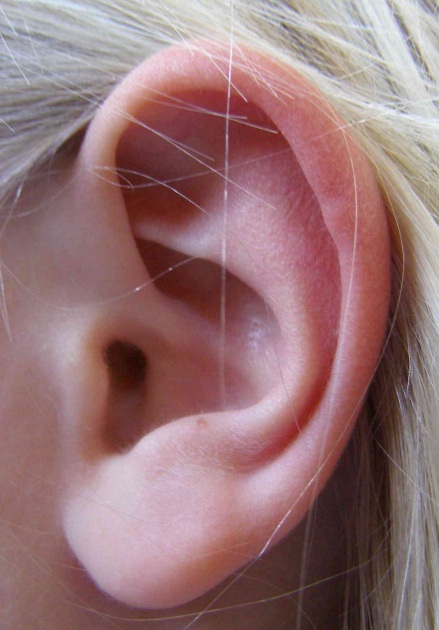
Can you trust your inner ear?
When Superman’s ears rang at frequencies no one else could hear, it was usually bad news. But before you think that you’re gaining superhuman powers and are about to hear Lois Lane or some other poor, trapped soul’s pleas to be rescued, dear mystery man or woman of steel, you should know that many people (besides Superman and yourself) experience ringing in their ears.
Head noises such as ringing, perceived when there is no external source, are collectively known as tinnitus. The sounds you may hear range from ringing to buzzing, chirping, beating, humming, and roaring. But you are not alone. The American Tinnitus Association (ATA) estimates that nearly 50 million Americans have experienced tinnitus in one form or another. While many people only hear these noises sporadically and for a short period of time, tinnitus can be a more constant and even debilitating problem for some.
In order to understand the most common way in which tinnitus occurs, we must venture inside the ear. Sounds in the air cause pressure waves to vibrate your ear drum when they reach your ears. This motion is translated into pressure changes in the fluid behind the ear drum, and deep in the ear canal, tiny structures called stereocilia bend and tilt in response. These stereocilia are attached to hair cells (no relation to the hair on your head—these particular hair cells are sensory cells named for their fuzzy appearance). In reaction to the swaying stereocilia, the hair cells depolarize and release a neurotransmitter. Your brain finally receives this input from your ears by way of the auditory nerve and interprets these signals as sound.
But when stereocilia are damaged, for example if they’ve been bent out of shape by repeated exposure to loud sounds like gunfire or heavy construction, then this process doesn’t work as it should. The damaged stereocilia mistakenly tell your brain that you hear a sound even when there is actually none. Because stereocilia are not indestructible, they can remain damaged or even be permanently destroyed by these events.
Yet tinnitus is a symptom, not a disease, and it can be caused by many other triggers. Your mom was right, clean those dirty ears! Some people produce more ear wax than others and that waxy build-up can actually plug your ear canal and cause tinnitus. Certain medications that are toxic to the ear can also cause tinnitus, as can ear or sinus infections, head or neck injury, certain types of tumors, and vascular problems such as hypertension. The reasons behind some of these connections to tinnitus are not yet known—researchers are still investigating.
And here’s where the alcohol comes in.
Downing an excessive amount of intoxicating liquids over a long period of time (usually defined as more than that one stingy glass of wine a day) may contribute to hypertension, or high blood pressure. Although the connection between high blood pressure and tinnitus is not well understood, it has been observed that both high blood pressure and excessive alcohol consumption can make your tinnitus worse. And so can other factors that often accompany drinking, like stress or caffeine.
My guess is that if you’re going to a bar or club to get your drinks, they’re serving you another tinnitus irritant for free—loud music. If you haven’t been stopping bullets or using power tools lately, then maybe hanging out in pub environments where you have to scream to be heard is contributing to the ringing in your ears. Remember those beat-up stereocilia from above? Those blaring speakers are kicking them when they’re down!
Most people don’t have a problem coping with an intermittent ringing in their ears, but according to the ATA about two million people suffer from tinnitus so acute that it interferes with their ability to function on a daily basis. While tinnitus can affect people of all ages, chronic tinnitus is often a factor of hearing loss due to aging. According to the Mayo Clinic, if the ringing in your ears is persistent or if it becomes worse, and if it is accompanied by dizziness or hearing loss, it’s time to see a doctor.
Treatment for tinnitus is very individual and can range from avoiding foods that may make your tinnitus worse to taking medications. To learn more about tinnitus, visit the American Tinnitus Association or the American Academy of Otolaryngology (an association of ear, nose and throat doctors).
I’ll leave you with this bit of information: when someone complains about tinnitus, doctors often ask if they just attended a rock concert. Doctors recommend protecting your hearing whenever possible, because in addition to the avoidable causes of tinnitus there are other causes that are not as easy to control. Do your stereocilia a favor and back away from the 6-foot wall of speakers on stage, at least until you perfect your ability to lift your arms and instantly jet off to a quieter planet.
——
Got a question for us? ASK!
Filed To
Share
About the Author

Sabina Borza
Sabina Borza is a lover of life, culture, and science. After flirting with medicine, veterinary medicine, and primatology, she realized she was better suited to dabble in many fields as a writer rather than devote herself to one academic pursuit. She holds a biology degree from Clark University, but will probably return to school every couple of years for the rest of her life.
93 Comments
David, I’m beginning to believe that permanent damage is an accumulation of abuse to our stereocilia. I have no particular load noise exposure, but three months ago, I helped my husband fall trees on our property. Since that day, not only do I have loud ringing in the left ear, but I almost entirely am deaf in that same ear. This comes without any prior hearing loss, and without even an ear infection in my life. After many doctor appointments which presumed sinus infection, I resign to living with ringing. I have had to give up my red wine; as that aggravated the loudness of the ringing. Asperin, as a prescription, also aggravates the ‘plugged’ or ‘air pressure’ feeling.
My doctor insists that this symptom is temporary. I’m waiting.
what i’m doing to reduce my tinnitus is taking lipo-flavonoid plus 3 vitimans a day , eating fruits, veggies and doing 20 minate exercises 4 days a week.the lipo-flavonoids won’t work over night because it’s not medication but will in 1 to 6 months.since using them my tinnitus has quieted down about 50 -75%.my advice try lipo-flavonoids for about 2-3 months and reduce smoking , sodium, and caffenee.results could come.the only good thing in my case is that i could sleep, eat, and focus without hearing much rinnging.take care every body!
another thing i had this in 2010 and after using lipo-flavonoids it went away but came back after not taking vitimans in august of 2011.i also ate too much junk foods with high sodium and did not exercise much.
Could stereocilia be damaged from listening to music in your head phones?
High Blood Pressure is my guess. Just all the sudden High pitch noise ringing.
I am looking for answers as well for ringing in my ears. Last summer it was real bad, I tried lipoflavoid (not sure if it worked but I took it anyway). My doctor says i have a hole in my ear drum. I also have heart disease, vascular disease and am a recovering alcoholic. Over the winter my ear ringing was almost non existant so I thought I was cured. Then, the weather got warm and sunny and now my ear is buzzing again. I wonder if barometric pressure has anything to do with it? It is soooo bad I would consider moving to another state if I had to. Any suggustions?
Hi Lynda,
Both of my ears have a hole in my ear drum. I’m scheduled to have my left ear surgery on the 27th of this month to improve my hearing and to prevent ear infection. But for the past few weeks, I had an ear infection(drainage), don’t know the cause. Then, the doctor prescribed an antibiotic ear drops but I did not like it as it goes straight to my mouth(so bitter). So, I went back to see the doctor and asked for another medication. He prescribed an oral antibiotics. I felt better but then, after I stopped taking the antibiotics, I got a cold and was sick. That’s when I start hearing the ringing sound like a dial tone. Sometimes, I could hear my own pulse beat. I researched some today and I found out,the beating sound is called “Pulsatile tinnitus”. I called my ENT specialist but there’s no schedule available until next week so I went to an urgent care and the doctor prescribed me to take antibiotics again. Please check on the website I researched on because there’s a lot of factors why we experience “Tinnitus”. I’d be curious to know how my doctor will treat this symptoms. As of now, I still have a cold and possibly a sinus infection.
http://www.nidcd.nih.gov/health/hearing/pages/tinnitus.aspx
My ear ringing is horrible! I have high blood pressure that is treated with medication. My rinign get worse when I press on my head. Isnt that weird?? SO of course it is so much worse in the morning after laying my head on the pillpw all night. Its making me so miserable. :(
Our organization, Aspartame Consumer Safety Network and Pilot Hotline (since 1987) has many studies, along with personal testimonials (often the best barometer of what’s going on!) in our files that prove the artificial sugars, Aspartame (and Neotame) can also be triggers for Tinnitus. I even have a letter in my files from the 1980s, written by the head of the American Tinnitus Association on its letterhead, that Aspartame causes (and exacerbates) ringing in the ears for many. Often, when the sweetener is avoided, but ingested again by accidental exposure, the ringing returns. Not difficult to explain, when one realizes that every molecule of Aspartame consists of more than 10% Methanol, or wood alcohol, which breaks down in the body into Formaldehyde, Formic Acid and other neurotoxic substances. MSG is mentioned for its Glutamic Acid Content. Rightly so. However, Aspartame is 40% Aspartic Acid, effects of which are the same as Glutamic Acid in humans.
We must therefore conclude that whether intentionally or accidentally omitted, Aspartame is the 800 lb. gorilla in this article nobody mentioned. ATAs acknowledgement of this fact on several occasions in past publications (Newsletters, etc.) have been a great service to readers suffering from this sometimes debilitating condition. This article seems remiss in this one area, unfortunately. — Respectfully, Mary Nash Stoddard/author Deadly Deception Story of Aspartame (Odenwald Press 1998)
Simply plug your ears with earplugs…..Then you won’t hear it!
I’ve had this constant ringing in my ears similar to the ringing of the previous posters above, it sounds like a high frequency pitch that never goes away. My husband of 7years has always had loud music in our car. He has aftermarket subwoofers, 6×9’s, amplifiers, and a digital equalizer and he cranks the music to it’s max. After all these years all I got was 3 traffic tickets for disturbing the peace LOL but a week ago the ringing started after my workout at the gym and having the volume turned up in my headset WTF? all I remember was taking my earphones out and the ringing was there and never went away since. I’m having trouble hearing cause the ringing just overpowers any other noises everything just sounds muffled. If I cover my ears the ringing gets louder so it’s pretty annoying when I’m trying to sleep cause I like to cover my head with my pillow I hope this won’t be permanent or I’ll go INSANE!!!
Thanks for this Information.
I’m 23 years old and have had a problem with tinnitus throughout most of my life; I’d like like to contribute my own input on it.
As I said, I’ve experienced it most of my life, and the most contributing factors that causes the ringing in my ears has mostly been down to stress; such as whenever I’ve been working and constantly find myself being pestered to the point that I just become agitated.
Other times, I find that whenever I’ve been listening to some music or a video on YouTube a tad louder than it should be has caused ringing in the ears, shortly followed my a headache.
With that said, I have noticed that whenever myself or my other half experiences a headache, of where the pain is felt across the forehead, rather than at the sides or top of the head, we hear an ever-constant flat-line like ringing.
Even as I type this, I have a headache and the tinnitus is only adding to it, however I’ve found that draining out the ringing often helps, as well as eventually ridding it.
Sometimes, I’ll sit in the bathroom with the tap running, and other times I’ll listen to “White Noise”, which also helps with getting to sleep; or I just simply listen to some music, like I’m doing right now, just with the volume turned down, just enough to merge with the ringing.
The more you concentrate on the ringing, the more persistent it is, and the louder it becomes, so it really is best to try to take your mind off it, whether that’s watching a movie or playing a video game.
One time, I went through an entire week with nothing but hearing that flat-line sound, which began to slowly drive me insane, to the point I was pouring things that I shouldn’t have, into my ears; of course that did not help and I highly recommend to never pour anything into your ears.
Eventually, I went to the doctors and they prescribed me some Antibiotics, which sure enough worked almost instantly; after the first 24 hours of being on the medication, the sound had toned down, and after 48 hours the sound had completely vanished, leaving me feeling dazed and confused, because it was so quiet and so clear.
Whenever my partner experiences the ringing, she’s told me that simply taking paracetamol (pain relief) has helped, but usually whenever we get it – It’ll fade out after a couple of minutes, or if we’re unlucky within a couple of hours.
I suggest people to just try to relax and take things easy; there’s nothing really to worry about tinnitus, other than the fact of acquiring a headache from it, but in extreme cases – your best bet is to visit the doctor and get medication that could possibly help; or just get your ears syringed, as I found that helped reduce the amount of times I experienced it.
Anyway, that’s my input, I hope this provides useful for some people!
Regards.
Can getting water in your ear cause ringing also? I recently got ringing in my ears, when i shower most days i use the shower to clean out my ears and my friend told me it’s from getting too much water in my ears when showering and then by using tissue to dry and clean them when i get out because i’m pushing the excess water in rather than letting it out.
The part about avoiding certain foods to make it better is flat wrong. It’s simply a number of factors starting from genetics then hormones. Yes, fluid in the ears has something to do with tinnitus, but getting on prescription drugs really won’t help that much.
My ears have rang my entire life,but about a year ago became considerably louder. This happened around 3years ago and lasted for about 2 weeks, but then quieted down again. They have been ringing really loud now for well over a year. I have seen half a dozen doctors that have had theories but no solutions. I am starting to become accustomed to it, but it is hard to do. At one point I seriously considered taking my life. Glad I didn’t now. I feel for you guys and gals out there in the same boat. It can drive you nuts because there is no escape from it. . For those of you that are struggling with it,all I can say is hang in there, you will begin to get used to it. Doctor gave me a very mild dose of klonopin which helps when they get really bad.
Tinnitus is also positively correlated with the ingestion of certain medications such as aspirin. Aspirin is a blood thinner, and some foods and drink contain natural blood thinning capabilities, these natural anticoagulants are called salicylates. Some alcohol contains salicylates, the two most popular being red and white wine. My mother suffers from this, and I was interested since I am studying speech and hearing. So, you may not have to ingest copious amounts or be at the club, like this article suggests. If you are drinking a glass or two of wine and experiencing tinnitus then the salicylates are the answer! If you are experiencing severe tinnitus and it is affecting your life negatively please contact your local audiologist, you can search local audiologists through the handy dandy American Academy of Audiology: http://webportal.audiology.org/Custom/FindAnAudiologist.aspx
Hey! This is kind of off topic but I need some
advice from an established blog. Is it difficult to set up
your own blog? I’m not very techincal but I can figure things out pretty quick. I’m thinking
about making my own but I’m not sure where to start. Do you have any tips or suggestions? Thank you
very informative but trying to make those superman references was a bit of a stretch and not as funny or clever as u thought
I get loud ringing and buzzing in my head and ears as i suffer with migraine. I have in the past had the room spinning round and i couldn’t lift my head off of the pillow and when i did i was very sick. My problem seems to be started by bad sleep patterns which sometimes brings on the migraines. I never had these problems until i enteres the menopause my doctor said it was to do with hormonal levels etc. I now try to keep stress levels at bay that seems to help and for the migraines i take feverfew tablets which does seem to keep the frequently and pain of the migraines came on less nowadays which does make my life less stressful.
I went to the club last Monday night and left to go home with a chirping cricket sound in both ears. Though I was by this big speaker they had blasting the music I was drinkin and having a good time. But anyways, now it’s Thursday and my ears just have this prolonged ringing I’ve never experienced this and it’s kinda pissin me off because it’s like “no cure” for this smh will this ringing go away within some more days I hope so . My life is not the same cant sleep!!!
Thanks for this informative article that gives so much info about tinnitus from various angles. There is a wealth of information online these days about treating the condition, I only hope something definitive comes through really soon that is recognized as the cure.
I have had Tinnitus for about the past five years, and it is my biggest regret: It hit me one afternoon while I was in the kitchen and it’s pretty much the only thing that I can think about since. Some days I hardly notice it, but other days it rules me like a rash. My hearing was damaged on the job, but it was so subtle that I didn’t even know it was happening until it was too late. Silence is Golden. Protect your hearing.
Hi there, its good article on the topic of media print, we
all be familiar with media is a fantastic source of information.
Nice ear!!
Howdy excellent website! Does running a blog
similar to this require a large amount of work?
I’ve absolutely no expertise in computer programming however I had been hoping to start my own blog in the near future. Anyway, should you have any ideas or techniques for new blog owners please share. I know this is off subject however I just wanted to ask. Kudos!
I think tinnitus might also be genetic, I don’t go to concerts, I work in a relatively quiet environment; most of my family 25+ have diagnosed tinnitus. Im only 19 and can hear ringing when I’m falling asleep, when its unberably quiet, and especialy when i drink a few beer. If someone has a viable explanation other than genetics I would love to hear it.
I never had any ringing in my ears until I was diagnosed with high blood pressure and put on meds for it at the age of 50,every now and then it comes on, or just gets louder. I’ve been to the doctors and all they do is look in my ears and say everything looks great you just have whats called tinnitus and the’re is nothing you can do about it. I do notice how ever that when it gets louder I don’t feel very good, kind of light headed and shaky, I wounder if this has something to do with my heart not working quite right at times?. But all the doctors say is no its nothing to do with that or the meds your on. I have had a heart trace done and stress test done as well but when these tests are done I fell perfectly normal (as in no ringing) and there is nothing out of the ordinary with me other then my blood pressure spiked fast in the stress test but that was normal as to I have high blood pressure.So no doctor can tell me why this just came on like that and why I feel how I do when it does, I’m at a lose for things to do any more, so I just put up with it.
I am new with ringing in the ears. Only about 6 weeks. I only have it in my right ear and have slightly decreased hearing in that ear. My doctor ordered an MRI which I probably will have to rule out a neuroma (benign tumor). But even if I have one and surgery is done, it won’t necessarily cure the problem.
And the ringing is driving me crazy. I’m thankful for the comments that say the brain will get used to it. I hope so. My sister has told me that also.
In the meantime I really suggest some sort of white noise whenever you are in a quiet environment. There are several great free apps you can download. (Running a fan also helps some people). I keep I keep the white noise at the lowest necessary volume that almost completely masks the ringing. It allows me to relax enough to sleep. If I need something more, I take 25 mg of benadryl or 3 mg melatonin.
This who hear ringing “white noise” and have always heard it when there is complete silence are sensitive to both UHF, VHF, WIFI, and electricity in general. It really is a burden and if you focus it gets really loud to the point you want to stab your ears. But don’t fret folks. Just keep an old tube TV on and everything will be fine. The old TVs somehow abrupt these annoying frequencies. Either that or years exposed to old tube TVs and their distinct high frequency whine when turned on is now absent due to new TVs and the brain is substituting via adaptation of loss of sound like losing a limb. The mind fabricated sensations even thought the limb isn’t there…just my logical perception.
I hate auto correct…my final conclusion is…those who experience white noise constantly are probably suffering from lack of tube TV frequencies combined with new transmission frequencies over the airways. The average person is oblivious to this just like the general public is ignorant to the NWO…That being said…keep an old TV on at all times and you’ll find a balance. GOD BLESS
Wow because this is very helpfulexcellent work! Congrats and keep it up.
Have this chirping sounds in my left ear after watching videos on my smart phone using the ear piece at full volume. Its been three days now and its still the same what do I do now? Would the ringing stop?
Weird, its not about superman.. I really do feels like presence of water in my ear and it does makes lots of sounds, sometimes it wont let me hear anything and its blocking my ears.. it always make the sound of water inside my ears.. and its getting serious more and more when I consume water from my mouth.. not from the outside.. I mean it get worst when I drink water ..
You are wrong about your assumptions on how alcohol causes tinnitus.
I have below normal blood pressure, I only drink alcohol once a week at home in a non-noisy environment and yet I only experience tinnitus after I have had a couple of drinks.
For me, it is a lot of different sounds. The sound I believe I’m actually hearing in my ear, is due to my blood pressure. I recently went to an opthamologist and found out that I have a a blocked vessel in my retina. Quite serious. I’m blind in one eye due to cornea scarring from from shingles. Now a chance I could go blind in the other eye from this blockage. Now due to this blockage, I have to have heart studies done. I had nothing wrong with my heart or blurring of my eye until psychiatrists put me on psych meds. I kept telling ” my ” psychiatrist that these meds were hurting my heart and the noises in my “head and ears” could drive a person crazy! I had never been on psych meds before and I no longer am on them. I have researched side effects that never go away. Some meds can actually rupture the ear drum. Unfortunately, patients don’t know much about the meds docs put them on, and the side effects that can devastate their lives. The thing about it, I should never have been put on these meds. The first med was for a sleeping disorder. I didn’t realize at the time, but it caused severe hallucinations. I was hospitalized and psychiatrists were aggressive with more antipsychotic meds. Talk about noises and sounds in my ears! I’m praying all the damage from the psych drugs are behind me. Except for the damage I know I have which a lot of it I have not discussed. That’s another forum. Don’t be ignorant with prescribed or non prescribed meds. Do your homework if your having any problems and especially if your not satisfied with what your doctor is or is not telling you. It’s your body, and side effects could last forever!
My brother recommended I might like this blog.
He was once totally right. This publish truly made my day. You can not believe just how so much time I had spent for this information!
Thanks!
My high pitched ringing improved after I used a derivative of Swimear that is alchol based! I am guessing that as a swimmer and frequent showerer water gets trapped and upon applying this solution one night after I was unable to fall asleep due to the persistent high pitched beeping… it was as if magic happened so do give it a try!
Mine was caused by diazepam withdrawal , I’m almost off these crappy pills which is another problem . If you take benzos and are trying to stop them , this is what happens . I’ve read that it never goes away if you have tried to stop taking them even after you have stopped completely.
I’m no stranger to pulsatile tinnitus since it was brought on after my infection that previously affected my sinus, infected the muscles controlling the Eustachian tubing. After getting the procedure to have a ventilation tubing installed, it eventually took over the process until the muscles operating the tube recover. But at the same time I was taking in excessive amount of caffeine which lead to a bout of pulsating tinnitus. Also complicating the matters more I drank moderate amount of wine and beer which aggravated the tinnitus. However after taking the medication to control the tinnitus and completely removing caffeine and alcohol from my system, I no longer have this annoying pulsating tinnitus. I also avoid high dosage of naproxen and I feel good.
I’ve been comforted by reading these comments and wanted to share my story. I’m 59 years old and started hearing a low intermittent hum in my right ear around six years ago. It sounds like the hum of a an electric transmission line. My doctors say my ear looks fine, my blood pressure is normal, hearing tests are fine. They’ve prescribed antibiotics, Nasacort, advil, ear drops…nothing has helped. Sometimes, when I’m at the end of my rope, I’ll take an ice cube to my ear, leaning over the sink so the melting water will run out of my ear. That will stop the hum for about five minutes. When it gets really bad, I make a doctor’s appointment, and guaranteed: The hum will stop for a few days. It may be stress related, not sure. Maybe it’s the cause of my stress. Please keep the comments coming and share any tips you may have.
Great reading everyone’s comments like carol my tinnitus is from diazepam withdrawal it’s been over 2 years now and it is still debilitating and annoying 24/7 If only I had known the consequences of taking diazepam I would never have touched it. Be warned.
Also the ringing can be something electrical in your dwelling, an AC/DC plug in, light or light fixture or just some random power source. Have you ever heard the buzzing of a street light? Your interior lights can buzz and or ring also. Just like street lights. There’s a really simple way to tell the difference though you guys. Just plug your ears. If it’s something in your ear causing the sound, then you’ll still hear it with your ears plugged. If you do not hear that sound then it’s something external. As in, outside of your ears. Hope that helps. Take good care of your ears now so you can have good hearing when you’re older.