Harm reduction workers are burnt out. Will budget cuts set them on fire?
Insecure and emotionally demanding jobs have long taken a toll on this workforce. The Trump administration could push them to breaking point.
Sam Nichols • November 13, 2026
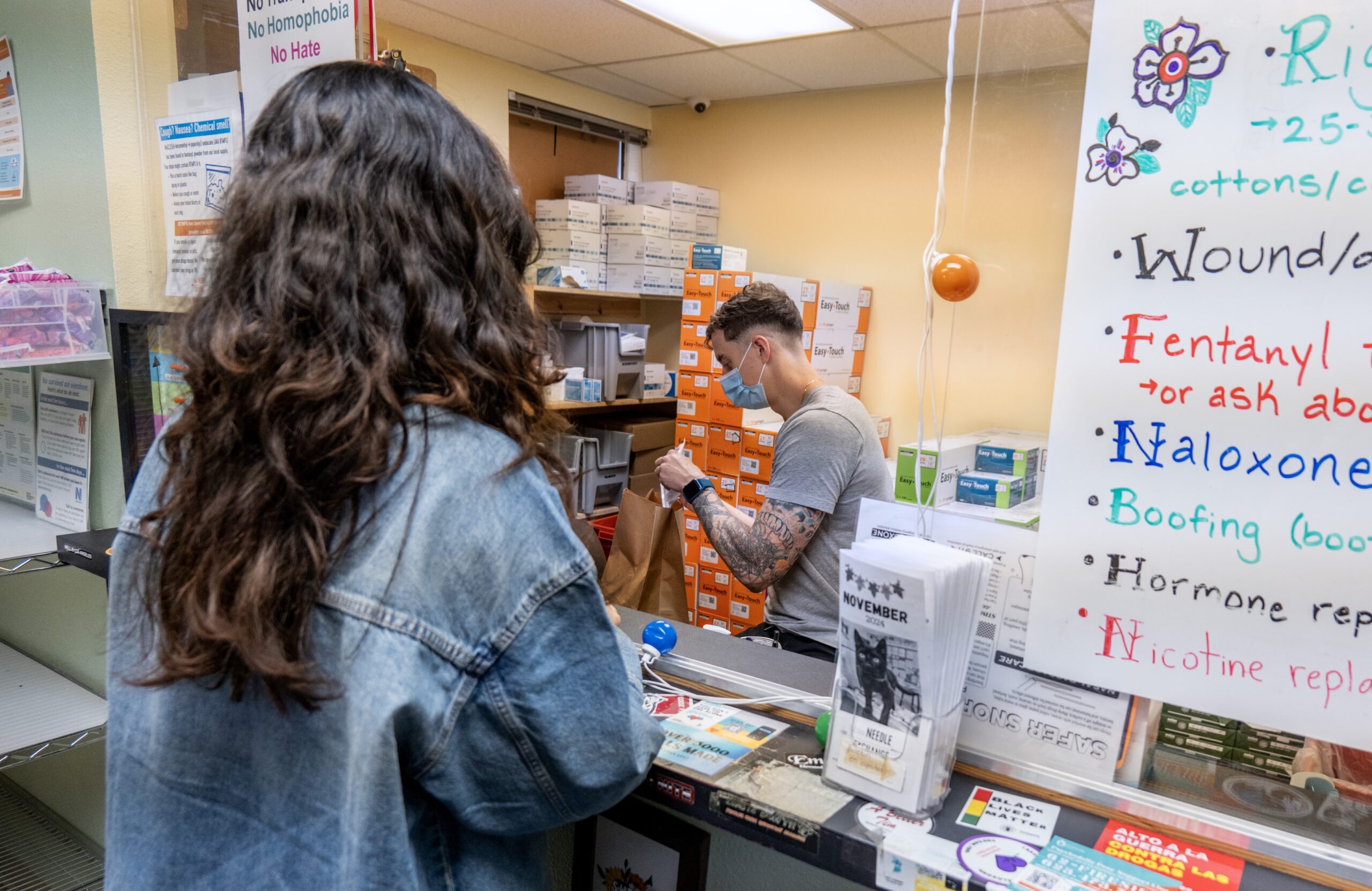
The federal government’s rejection of harm reduction as a drug policy threatens to place more pressure on already exhausted workers. [Credit: Empathy Lens Collection]
For many working in harm reduction, a form of health care designed to minimize to dangers of drug use, the job is rewarding but also physically and emotionally exhausting.
Burnout is common across the harm reduction sector, with stressors like demanding work, job insecurity and a repeated exposure to death all taking a toll. But now, a shift in federal policy and funding cuts threaten to push this workforce to breaking point.
Sam Nichols spoke to experts to understand what these budget cuts mean for harm reduction in the U.S. and the people who rely on these services.
(Scienceline intro music)
Sarah Hofmann: Hello! Welcome back to Scienceline. I’m Sarah Hofmann, the digital editor, and on this episode, Sam Nichols will give us a look at burnout in harm reduction workers, and how federal policy changes are adding to the issue.
“Harm reduction” refers to strategies, programs and resources that aim to reduce negative outcomes associated with substance use and other high-risk behaviors: for example, providing drug testing kits to help prevent accidental opioid overdoses, or offering syringe exchanges to encourage people to avoid reusing and sharing needles, which can spread disease.
Working in harm reduction can be taxing, to say the least. Here’s Sam to tell you about some of those individuals’ experiences, and the impacts that they fear recent federal funding cuts may have.
Sam Nichols: They found her body towards the end of the summer. As Terri Wagner remembers it, she’d been missing for a while.
Terri Wagner: I remember the urgency in a lot of people to like, look for her. And then, by the time they actually, I guess, figured out, she was passed away in the apartment.
Nichols: Terri got the news shortly after she was discovered. She’d overdosed in her apartment. Her body had been there for days. She was only 32.
Wagner: She was so young, and that was pretty hard. No one should have to go like that.
Nichols: Situations like this aren’t unusual in Terri’s line of work. She’s a case manager at Prevention Point. It’s a health facility in Philadelphia for people using drugs. That means there’s nurses providing wound care and blood tests. There’s also a syringe exchange, addiction treatments, as well as staff like Terri who provide support and organize things like housing applications or doctors appointments.
Terri loves her job. As someone in recovery, she finds it rewarding. She also just likes working with people.
Still, the work can be exhausting. Every week, Terri usually helps around 20 people. But that number can increase if other case managers are busy or overwhelmed. When she first started at Prevention Point three years ago, it was hard to switch off.
Wagner: It is very important to try to have your boundaries, and have that balance.
Nichols: The work can also be devastating. Around three months before that overdose in the summer, Terri was working closely with a client.
Once upon a time, this person was struggling with an opioid addiction. But now, she was in treatment and looking for work, with Terri helping her along the way.
Then, one day, Terri’s phone rang. She got the news that her client had just died from a heart attack, brought on by drug use.
Wagner: It was, it was just sad. It just made the whole day gloomy. And, it was just so disappointing as well, because it was like, all this work that she put in and then she just passed away.
Nichols: Terri has systems in place to keep herself stable in these moments. But that doesn’t change how physically and emotionally taxing this kind of work can be.
In fact, burnout is super common in harm reduction. It’s something Terri herself has witnessed first-hand.
I’ve seen people burn out here. Like, they had to leave, or they went somewhere else because it was just too much for them.
Right now, burnout is a problem, but it might soon become a crisis. Thanks to a federal ruling, many harm reduction programs now have fewer resources.
These cuts risk further burning out an already exhausted workforce. But what exactly does that mean for harm reduction in the U.S.? And what does it mean for the people who rely on these services? My name is Sam Nichols, and for Scienceline, I wanted to find out.
Paul LaKosky is an expert on burnout in harm reduction. He’s spent the last nine years as the executive director of the North American Syringe Exchange Network, which supports around 600 programs nationwide.
The first thing Paul will tell you is that this workforce is invested. That it’s —
Paul LaKosky: — not really just a job. Really, it’s a calling.
Nichols: But he’ll also say that the work itself is demanding.
Last year, Paul co-authored a paper published in the journal Drug and Alcohol Dependence, which suggested around half of the country’s syringe exchange workforce is burnt out.
The signs are usually small at first, Paul says: missing shifts, short fuses, bad moods.
LaKosky: The one kind of big rule we have at the syringe exchange is “don’t be an asshole.” So, if you’re starting to be an asshole, then it’s clear that you’re probably burned out.
Nichols: But sometimes, those symptoms can snowball into something pretty serious.
LaKosky: I do know folks who have been like, “listen, my own health has deteriorated so much I’ve gained 150 pounds, because I’m so stressed out from this work — I’ve got to take a break.”
Nichols: There’s a lot of reasons why a worker might get burnt out, but a common cause is money.
Harm reduction programs often operate on budgets akin to a Jenga tower. Some funding might come from donations, some from community support. But a big chunk of it comes from federal, state and local funding.
This means those budgets are often unstable and way too small.
Research suggests the median annual funding for a syringe exchange is $100,000. For context, that’s a quarter of what a small, rural program needed to operate in 2018.
Paul says few and fickle resources, plus job insecurity and demanding work, creates a lot of stress — stress that can worsen if a program is understaffed or is often dealing with surprise visits from police.
LaKosky: When you have to worry about money, when you have to worry about harassment, is your job stable? Those are all compounding factors.
But Paul says these burnt-out workers have now been set on fire.
Last year, President Trump signed an executive order which banned federal funding for any program linked with harm reduction.
The reason for this was that these kinds of services, quote, “only facilitate illegal drug use.”
In May this year, Drug Czar Sara Carter publicly reaffirmed this stance, claiming that harm reduction is a misguided and ineffective drug policy.
Sara Carter (press conference recording): In less formal terms, we are no longer supporting programs such as supervised use drug sites, which promote continued use without treatment.
Nichols: So to quickly go back to this Jenga tower, fewer blocks means even more instability.
Paul says many harm reduction programs now have less money for supplies and staff. Already, he’s heard of syringe exchanges struggling to get needles.
This means some programs could close, while those that remain open might have fewer staff. Paul’s worried any worker who’s already burnt out could soon reach their breaking point.
LaKosky: Who wants to work at an organization — and who can even afford to work at an organization — when they don’t know if their paycheck is actually coming?
The quantity and the quality of services and resources that we can provide to folks is going to diminish. And we’ll all end up paying the cost for that.
Nichols: I wanted to understand exactly what this cost could be, so I called Alex Macmadu. She’s an assistant professor of epidemiology at Brown University.
Right away, Alex told me it’s well-documented that harm reduction services prevent both overdoses and the spread of bloodborne diseases.
Alex Macmadu: Their effectiveness has been demonstrated across decades in multiple systematic reviews.
Nichols: One meta-analysis covering three decades of research says syringe exchanges alone have cut HIV rates among people using drugs by almost 60%.
We also know that giving out free Narcan — this medicine that reverses opioid overdoses — means fewer deaths.
This is good for everyone, Alex says. Not only does it minimize harm, but it also —
Macmadu: —reduces our reliance on these frontline points of care.
Nichols: And that takes pressure off hospitals and emergency services, potentially saving a city hundreds of millions of dollars a year.
Fewer harm reduction programs would have the opposite effect, Alex says. Which, we’ve actually seen happen before.
In 2018, West Virginia’s Kanawha County shut down its only syringe exchange.
During the two years prior to that decision, only a handful of locals using drugs had contracted HIV. From 2018 to 2020, though, there were 65 confirmed infections, alongside an increase in overdoses.
Macmadu: West Virginia, in many ways, can be a case study of what not to do.
Nichols: Given everything we know about harm reduction, I asked Alex why the Trump Administration would target these programs. She said it’s something that doesn’t really make a lot of sense.
Macmadu: To be frank, it feels — at times, these cuts can feel like a willful disregard of the most robust available evidence that’s available to us.
I reached out to the White House to ask about this, but I didn’t hear back.
Right now, Paul’s staying optimistic. He says these workers will go on for as long as they can. But he’s also realistic about what happens if they do burn to ashes.
LaKosky: Make no mistake, people will not be able to get services when they need them. And what, really, the end result will be is more people will suffer, more harm will happen, and the problem will get worse, not better.
Nichols: If this story has brought up anything for you, you can contact the Substance Abuse and Addiction Hotline at 1-844-289-0879, which is available 24/7.
This episode was reported, produced and mixed by me, Sam Nichols, with music from YouTube Studios and Blue Dot Sessions. Thanks for listening.
(Scienceline outro music)
MUSIC: Coulis Coulis – Confectionary [Passing Station 7 – Resolute | Blue Dot Sessions] | Final Girl – Jeremy Blake | YouTube Studios] | Recording of Sara Carter from May 6, 2026 Office of National Drug Control Policy press conference | Scienceline theme by Jahzzar at the Free Music Archive
Filed To
Share
About the Author

Sam Nichols
Sam Nichols is an Australian writer and journalist. His work, which often covers healthcare, drug policy, addiction medicine and technology, has appeared in the Australian Broadcasting Corporation, SBS and VICE.