Virtual reality therapy may reduce voice hallucinations in people with schizophrenia
For people who hear voices but don’t improve with antipsychotic medication, a new form of VR “avatar” therapy could help.
Georgia Michelman • December 3, 2025
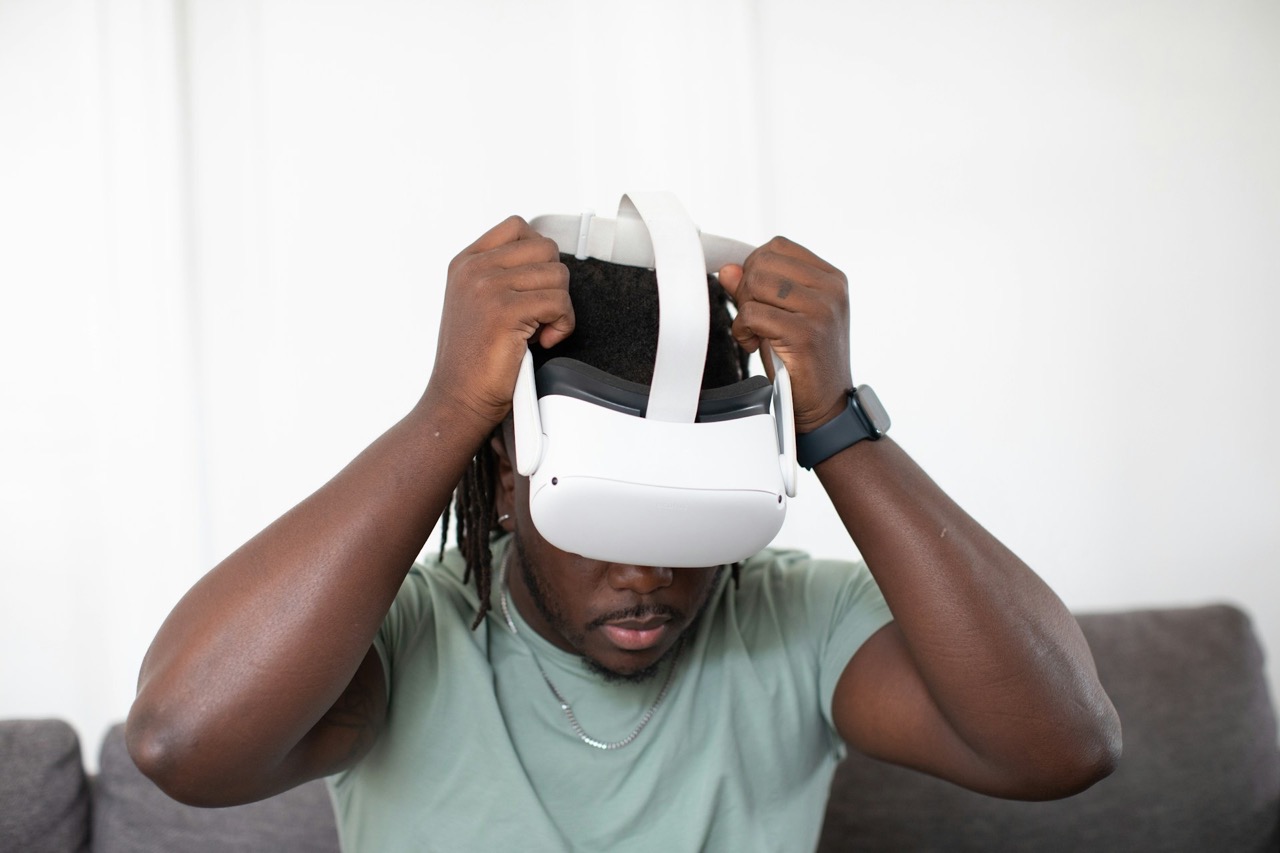
Antipsychotic medication is typically the first line of treatment for schizophrenia, but for those who don’t improve on it, treatment options are limited. New research suggests that interacting with a three-dimensional, digital “avatar” may decrease these patients’ voice hallucinations.
Schizophrenia affects around 3.7 million Americans. While an imperfect tool, antipsychotic medication in combination with social and clinical services can improve people’s lives, said Al Powers, an assistant professor at Yale University studying early psychosis. For the 30% of people whose symptoms don’t improve with medication, research is ongoing to establish better treatment options.
Louise Birkedal Glenthøj, an associate professor at Mental Health Center Copenhagen, is one of several researchers currently experimenting with “avatar” therapy, where patients talk to a digital character representing their hallucinatory voice.
Her team recently tested a form of virtual reality (VR) avatar therapy in 140 patients with schizophrenia who regularly hallucinated voices but hadn’t improved on antipsychotics, comparing them to 130 patients receiving the same number of sessions of talk therapy. Participants had on average heard voices for 15 years.
Similar to building a Mii character on Nintendo’s Wii console, participants customized the appearance and voice of avatars to simulate their hallucinated voices in VR.
Over seven weekly sessions, avatars, voiced by therapists, initially recited typical phrases patients’ hallucinated voices would say. Patients and therapists brainstormed responses to “assertively set boundaries” with the avatars, said Glenthøj. As patients began to stand up to avatars, repeating statements like “I don’t want to hear that anymore,” the avatars eased off the aggression and became more supportive.
HekaVR, which makes the software, has paid three of the study’s authors to teach other clinicians how to use it. Glenthøj said these were “modest” fixed amounts per session.
The researchers found that those in avatar therapy had less severe auditory hallucinations after three months of sessions, and fewer episodes for six months.
Of the patients in the VR group, 70% noticed improved symptoms. “Some reported meaningful reductions in the severity of their voices,” Glenthøj said, “while others mainly described feeling more confident and better able to cope.”
11 patients — nearly 10% of the group researchers followed up — stopped hearing voices completely, compared to five in the standard treatment group.
Five participants were hospitalized during the study because of increased auditory hallucinations, and one had an episode of self-harm. In such a vulnerable population, it was unclear whether this was caused by avatar therapy or other factors, said Glenthøj.
The therapy may have worked as a kind of exposure therapy to patients’ voice hallucinations, suggested Powers, who wasn’t involved in the study. In typical exposure therapy, “over time, your anxiety goes down with repeated exposure to the thing that’s causing you anxiety,” he said. “That seems to maybe be the pattern that’s going on with avatar therapy.”
But unlike successful exposure therapy for, say, an intense spider phobia, researchers could not demonstrate participants’ social functioning improved, which Powers called “unfortunate.” Glenthøj noted that social functioning is a complicated concept with many contributing factors that may not have been sufficiently affected during the short study period.
Claire Bien of Hearing Voices Network-USA, a mental health advocate who hears voices, cautioned that some people might find VR avatar therapy “frightening” given the intensity of the sessions and previous trauma.
Still, Bien, who has collaborated with Powers on research, said avatar therapy might “allow a person to see possibility” in learning to cope with voices. “Establishing a relationship with our voices is really important,” she said. “And changing the power dynamic, because we are more powerful than our voices.”
Filed To
Share
About the Author

Georgia Michelman
Georgia is a New York-based science and health journalist. She has an academic background in physics and astronomy, but also has strong interests in controversial health stories.
2 Comments
Thanks for being a bright light during these sometimes difficult times
Love how you bring people together and create genuine connections through work