As endangered species protections falter, national parks take on newfound importance
National parks can serve as ‘backstops’ for protected wildlife, but they may not be enough to ensure their long-term survival
Madeline Shaw • October 20, 2026
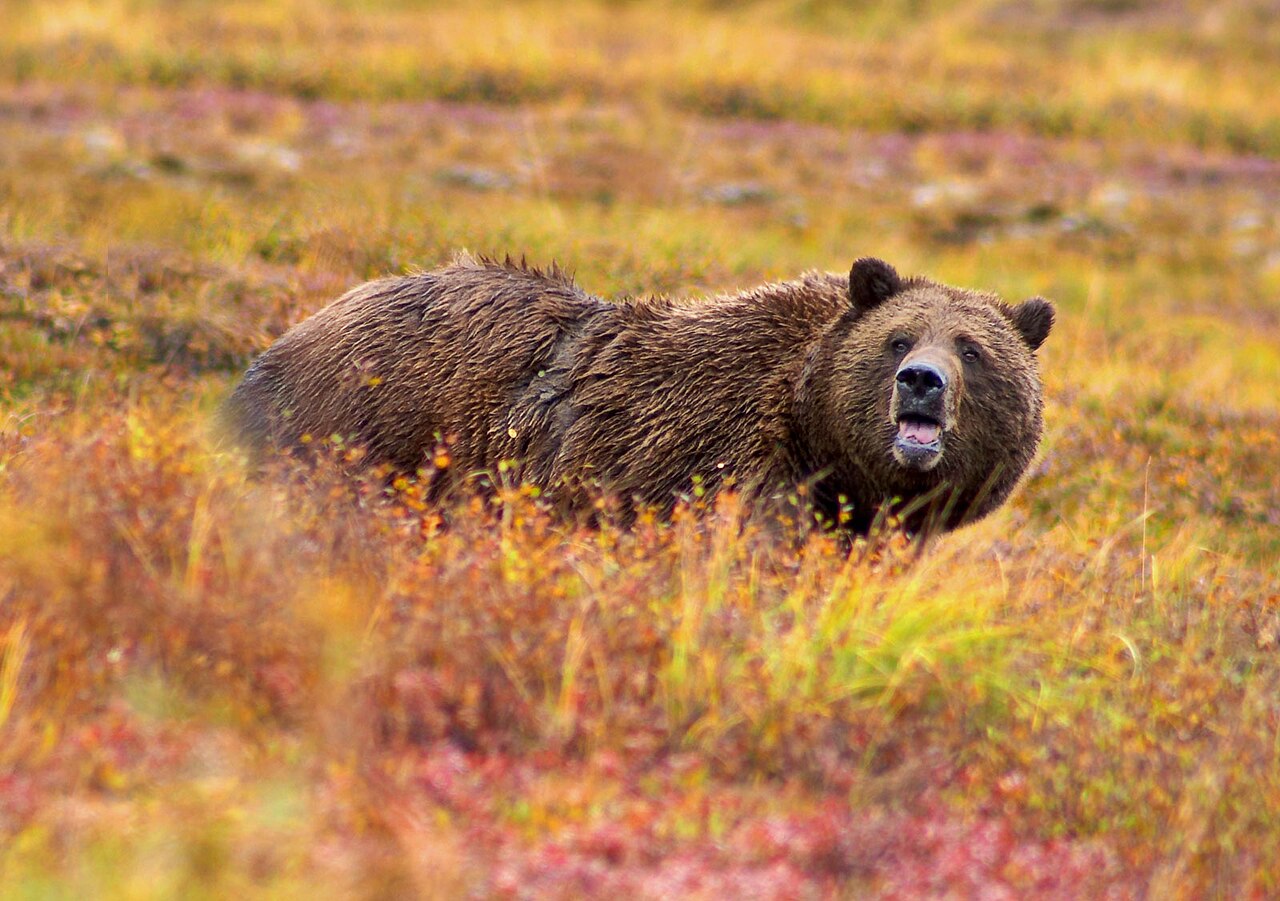
Grizzly bears, which are listed as threatened under the Endangered Species Act, could see different protection levels when they cross outside the borders of places like Alaska’s Denali National Park. [Image Credit: Jean-Pierre Lavoie | CC BY-SA 3.0]

There’s a network of invisible lines dividing America’s wild places. These boundaries cut through trees and across mountains, crisscrossing deserts and swamps alike, with wildlife paying them no mind. But when this line is the boundary of a national park, crossing it can increasingly mean the difference between life and death.
As the Trump administration rolls back longstanding habitat protections in the Endangered Species Act (ESA), land managed by the National Park Service (NPS), which has conservation built into its mission, is fulfilling an important role in protecting habitat for threatened and endangered species. National parks could function as a “backstop” to the weakened law, said Tara Zuardo, senior advocate at the Center for Biological Diversity.
That’s because national parks offer spaces where wildlife are shielded from potentially harmful human activities like mining, cattle grazing or logging that can happen on private property or public lands managed by the U.S. Forest Service or Bureau of Land Management, since they don’t have the same strict conservation directive.
National parks already provide habitat to more than 600 threatened and endangered species, according to the National Parks Conservation Association (NPCA), with Hawai’i’s Haleakala National Park alone hosting 103 different listed species. Some wildlife found in the parks are iconic, like the endangered Florida panther that stalks Florida’s Everglades National Park, while others are far less famous, like the Chisos Mountain hedgehog cactus found in Texas’s Big Bend National Park.
“Our national parks are incredibly important for preserving some of that core habitat,” said Stephanie Adams, director of conservation programs at NPCA. But she said they are not sufficient to save a species from decline indefinitely, because most “either need to move beyond park boundaries or rely on resources beyond park boundaries.”
Wildlife travel long distances for lots of reasons, such as hunting or mating. For example, sockeye salmon, a threatened species found in Washington’s Olympic National Park, spend much of their lives in the ocean before they return to freshwater streams and lakes to spawn. When they do return, they need clean waterways.
But the administration is looking to fast track logging, oil and gas projects near the watershed, which could cause stream banks to erode or destroy spawning grounds, Adams said. “Even though you’re not seeing the action like directly killing individual fish, over the long run it’s going to cause the population to decline.”
Animals with wide ranges that are cut off from migratory corridors or other populations could also suffer over the long term as they become genetically isolated and inbred, Adams said. Zuardo agreed that preventing extinction over the long term requires more than “a museum approach to just protecting that small little area around where those individuals exist” right now.
Historically, “the Endangered Species Act plays an incredibly important role in making sure that national park wildlife receive a high level of protection when they move across park borders,” Adams said. But the Trump administration has weakened these protections in recent months.
In July, the Department of the Interior and Department of Commerce announced a major change to the ESA by rescinding the previous definition of “harm,” which prohibited actions that would change or destroy the habitat a protected species relies on.
Just a few weeks later, there were more changes: The U.S. Fish and Wildlife Service (FWS), which administers the ESA, removed the “blanket rule,” which allowed newly listed threatened species to have the same protections as endangered species. FWS also changed the rules to give more weight to economic considerations when designating critical habitats for protection.
More changes could be on the horizon. Last month, FWS director Brian Nesvik circulated a memo that proposed restricting the definition of “take” under the law to only prohibit the intentional killing of a protected animal, not accidental or indirect deaths.
“This is just trying to do away with the law without coming out and saying we’re getting rid of the Endangered Species Act,” Zuardo said. “It’s catastrophic.”
Adams is worried about the threats posed by “increased development right along those park borders” in biodiversity hotspots like Great Smoky Mountains National Park, which stretches between Tennessee and North Carolina and could see “big impacts” from these extractive projects. The same permeable boundaries that allow animals to leave the parks can also allow air, water or soil pollution in.
Further elevating the risks for wildlife is that oil, gas and mining projects are coming at a time when habitats are already being stressed and altered by droughts, fires and other effects of climate change, said Elaine Leslie, a wildlife biologist who worked for NPS for more than 25 years, including as the former agency chief of biological resources. “The problem is all of these things compounding.”
The Trump administration’s ESA decisions are facing multiple legal challenges from states and environmental groups, including the Center for Biological Diversity. FWS declined to comment on this story because of the ongoing litigation. NPS did not respond to a request for comment.
As the issue goes to court, Adams is reassured by the overwhelming popularity of the ESA among the American public. An NPCA poll from earlier this year found that 85% of Americans—regardless of political party—agree that the ESA is important for protecting the threatened and endangered species that call the national parks home.
Leslie, who worked on the restoration of the California condor at Arizona’s Grand Canyon National Park, has seen the kinds of conservation success stories the ESA can bring about. In 1985, just nine California condors were left in the wild, but an FWS captive breeding program led to hundreds of birds being released. She remembers standing on the rim of the canyon, watching them soar overhead, having been brought back from the brink of extinction with human help.
But “without those protections, we’re failing,” Leslie said. “This attack on our national natural heritage is unacceptable.”
Filed To
Share
About the Author

Madeline Shaw
Madeline is a New York-based journalist who covers a wide range of issues at the intersection of science, health and the environment, with an emphasis on conservation and biodiversity. Her work has been published in The New York Times, Inside Climate News, Mongabay and elsewhere.