The Olympics are over. But the mascot stoats still face climate change
The two stoat mascots of Milano Cortina have a tough journey ahead of them as snow melts and their ability to camouflage worsens
Julie Zenderoudi • March 31, 2026
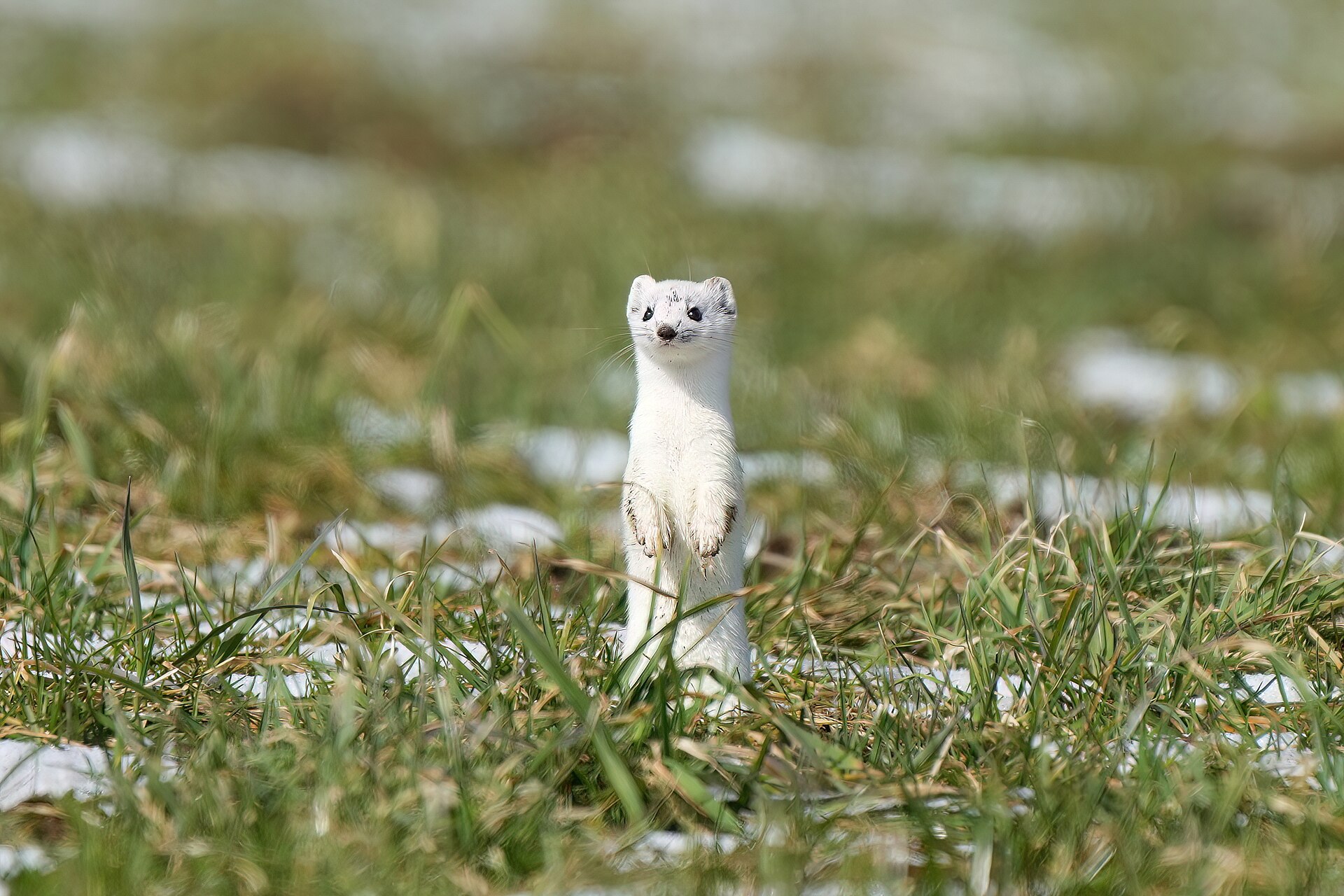
Stoats are increasingly threatened by climate change due to camouflage mismatch. [Credit: Giles Laurent | Creative Commons]
This year, as athletes stood proudly on the podium to receive their Olympic medals, they were handed something else as well: an adorable plush stoat.
Tina and Milo, the beloved sibling mascots of Milano Cortina, quickly became viral sensations, gaining popularity for their charm and cuteness. Yet few fans realize that the stoat, a small mustelid — the mammalian family also including weasels and ferrets — is increasingly threatened by climate change due to a phenomenon scientists call camouflage mismatch.
Stoats normally turn white in winter to blend in with the snow and hide from predators. Now, with warming temperatures, their camouflage is becoming a disadvantage. They’ve been turning white in areas that don’t see much snow anymore, exposing themselves to hawks, coyotes and foxes.
“You have a white animal on a brown background that’s very conspicuous, not camouflaged at all, and so more likely to be caught by a predator,” says Roland Kays, a leading mustelid researcher at North Carolina State University.
Scientists interviewed for this story agree that featuring stoats as the Olympic mascots this year was a positive development for the species, raising awareness of the threats that lie ahead.
Kays says that stoats, much like the winter Olympics, are facing an uncertain future. The “Winter Olympics are one of our cultural celebrations that are threatened by climate,” he says. “Every year it’s trickier and trickier. These challenges that we’re facing to have sports in the snow can mean life and death for the stoat.”
Part of the problem is that a stoat’s camouflage is triggered by seasonal changes in daylight, rather than temperature. While color-changing stoats camouflage around the same time every year, snow is becoming less and less predictable.
Kays is hopeful that stoats will eventually adapt. In fact, there are populations of the mustelids that don’t turn at white at all, an adaptation likely driven by evolution. The question is, will they adapt quickly enough to keep up with the rapid pace of climate change?
“That’s the million dollar question, and that’s what we’ve been trying to answer for 15 years,” says Marketa Zimova, who leads research on camouflage mismatch at the University of Wyoming.
However, she and other researchers in the field have faced challenges documenting the extent to which stoats have been impacted by warming temperatures — and thus the extent to which they are adapting. Because stoats are so fast, they’ve remained relatively hard to track. “They’re really elusive,” says Zimova. Researchers consistently fail to put radio-tracking collars on stoats because — for a lack of a better word — they tend to “weasel” their way out of almost anything.
Kays and his team of researchers have managed to capture images of stoats through camera traps, triggered by movement. However, he admits they’re a lot better at capturing bigger and slower animals. When pictured on film at all, the notoriously speedy stoats often look like nothing more than a blur.
One way to attract more stoats to the camera traps is with “stinky lures,” Kays explains. The idea is to “have them hang around a little bit so we can get a better picture,” he says. Surf and turf — a combination of hunks of red meat and salmon oil — has, at times, been enough for stoats to strike a pose.
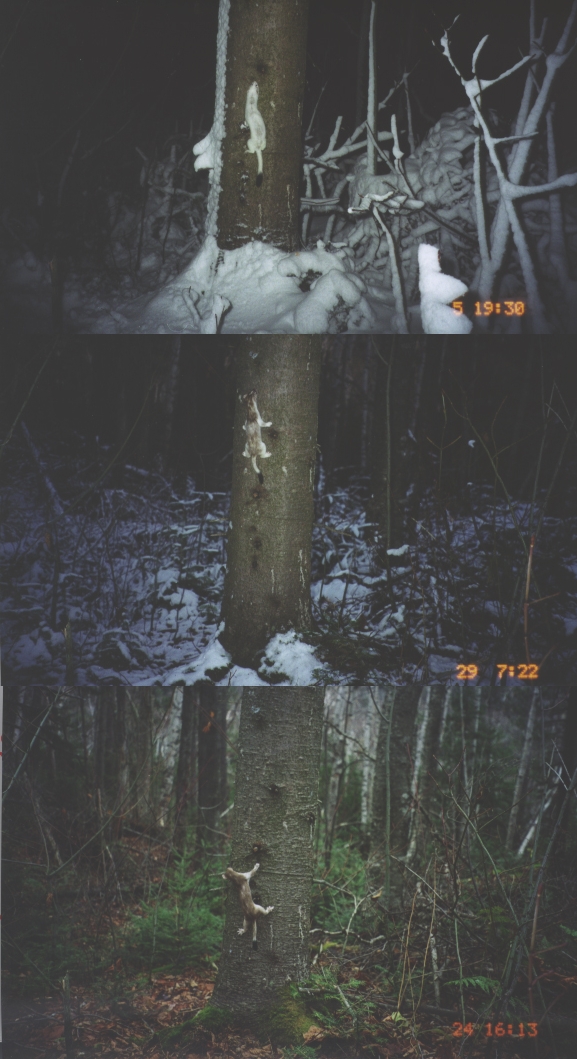
Camera traps are helping researchers get a better sense of stoat populations. [Credit: Roland Kays]
There has been a documented decline in weasels and stoats in North America in recent years. Lack of prey and habitat fragmentation are part of the problem, but scientists say climate change could also be to blame. More data is needed, and Kays is determined to fill the gap with his camera trap work in order to get better counts of stoats.
While stoats are not on the endangered species list, Zimova says that based on evidence from other color-changing species that are experiencing camouflage mismatch and are easier to study, scientists can infer that stoats are also in trouble.
A study from 2018, for example, points to increasing mortality rates of weasels due to camouflage mismatch. Researchers found that white-coated weasels were more likely than brown-coated ones to be preyed upon when snow cover was low because their white fur contrasts with bare ground.
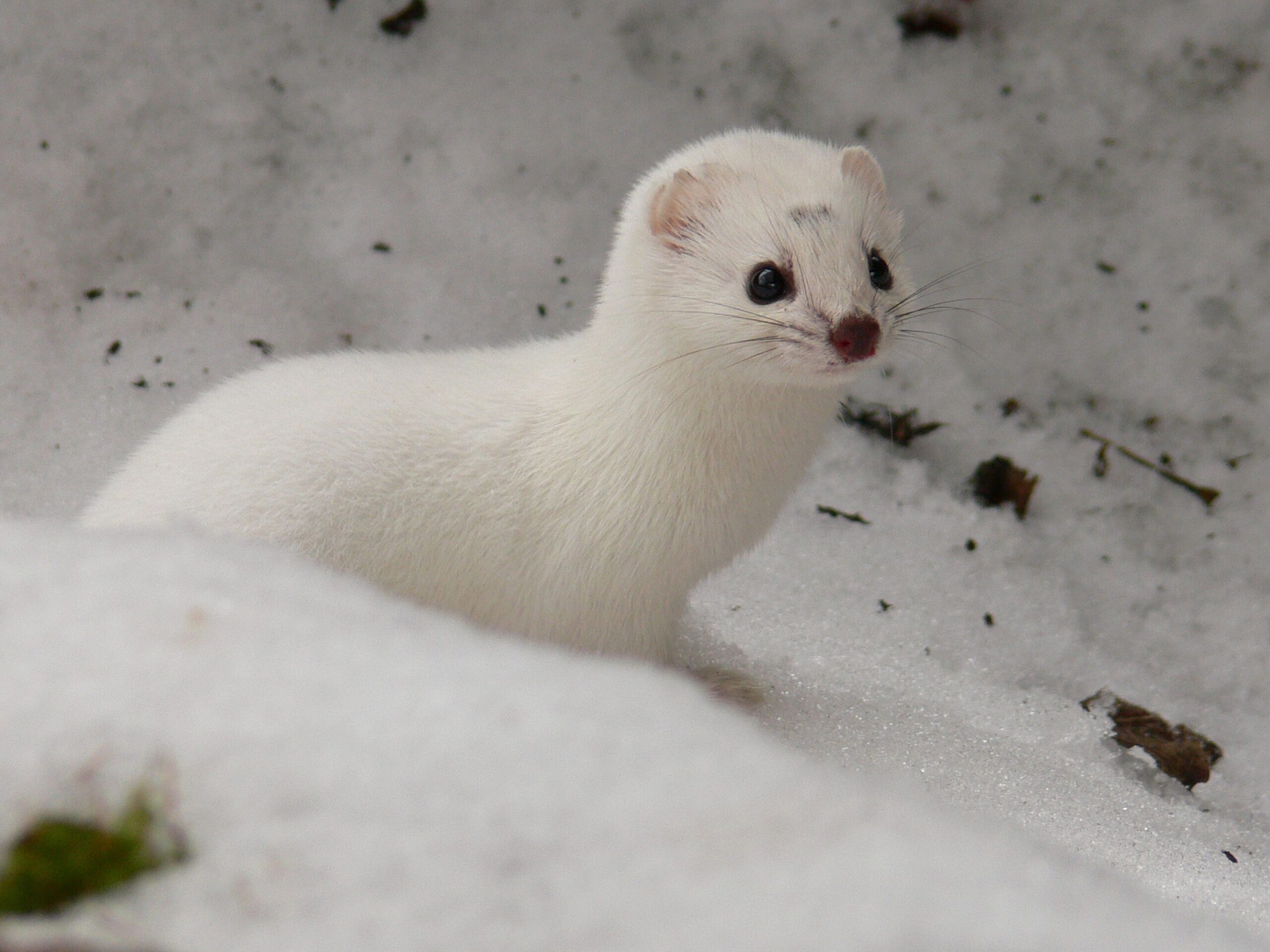
White-coated weasels are more likely to be preyed upon due to camouflage mismatch. [Credit: Karol Zub]
Part of the same family of mustelids, stoats are generally larger than weasels. The author of the study, Karol Zub, observed that unlike weasels — which predominantly hunt rodents — stoats tend to prey on larger mammals, particularly rabbits. In this case camouflage mismatch increased the probability of detection by not just predators, but also prey.
Unsuccessful hunting can have deadly consequences on stoats, says Zub, because of the energy required to capture prey. With their short legs, stoats can run extremely fast, but at the cost of expending an enormous amount of energy. If chase after chase does not result in a meal, “they can run out of energy, and eventually die,” Zub explains.
Scientists hope stoats will evolve to stay brown year-long, but only time will tell. For now, if Tina and Milo were out in the wild, Milo, who is a brown stoat, would probably have a better shot at hiding from predators and hunting down a meal.
Filed To
Share
About the Author

Julie Zenderoudi
Julie is a Brooklyn-based journalist who covers climate, health, and a wide range of science-related topics. She previously worked as an associate producer for Canada’s public broadcaster, where she created explainer-style videos for CBC News. Her work has also been published in Slate Magazine, Prism, The Brooklyn Paper, and more.
1 Comment
The ermine is quietly facing climate change, its white fur no longer blending into the snow but becoming a noticeable sign in a warming world.