Do state birds have a leg up in conservation?
Public attention and pride could help support state mascots and the habitats they rely on
Madeline Shaw • April 8, 2026
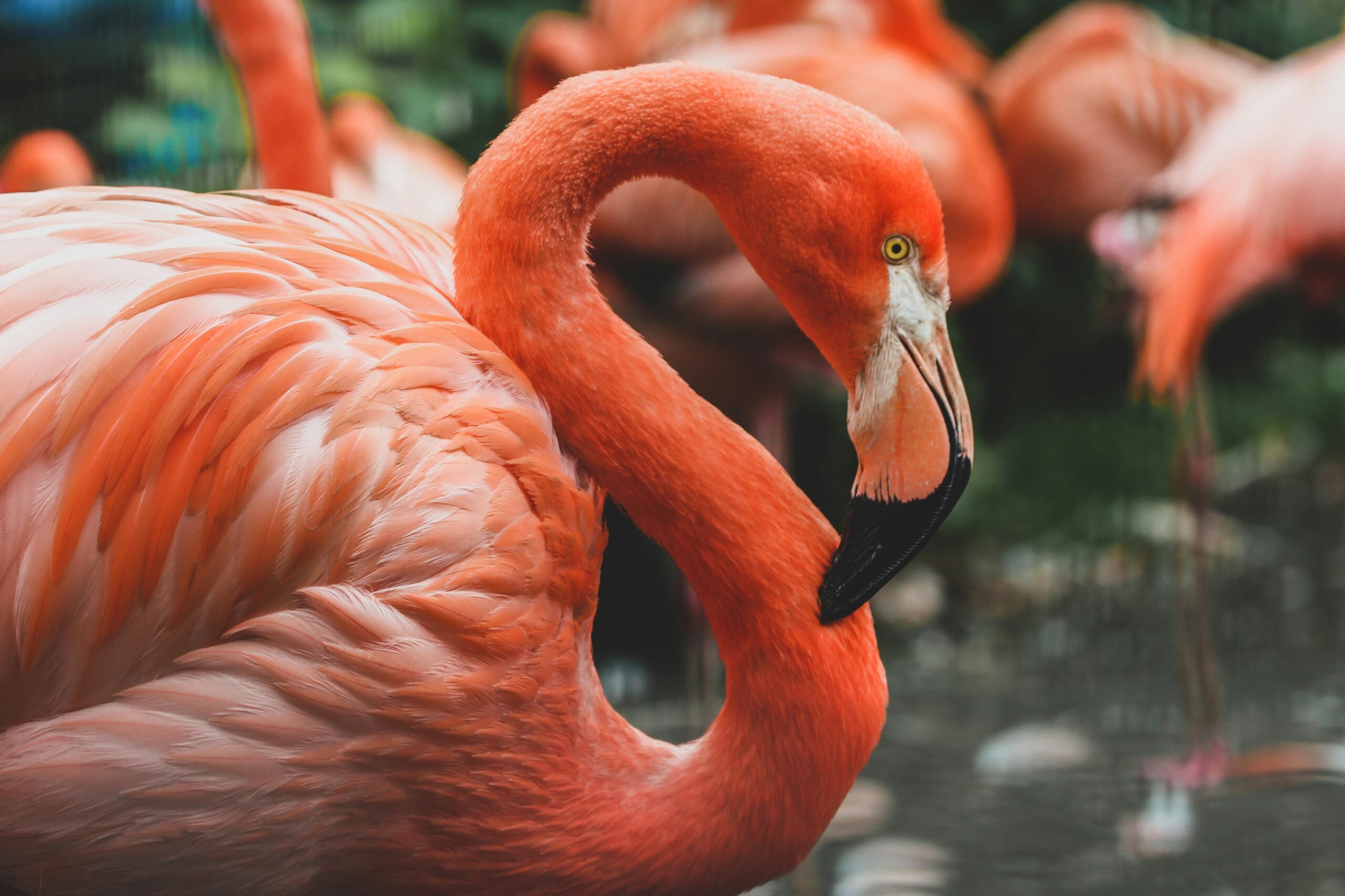
The American flamingo has long been associated with Florida, but the state could soon make it its official avian ambassador. [Credit: Gislane Dijkstra | Unsplash]
The American flamingo came close to unseating the comparatively drab northern mockingbird after the Florida house voted in February to make it the state bird. While the bill ultimately failed this session, the flamingo’s image is already plastered all over the state, slapped on tourist t-shirts, converted into plastic lawn ornaments and even co-opted by the Florida lottery.
Until recently, however, one thing was missing: living, breathing flamingos.
While these native birds used to be found across Florida in large numbers, rampant hunting for their rosy plumage drove them away at the turn of the 20th century. Even after the Migratory Bird Treaty Act of 1918 protected them from hunters, human development and habitat loss over the subsequent decades meant flamboyances — groups of flamingos — no longer had a suitable home in the state that could support nesting and foraging.
In recent years, ongoing restoration efforts in the Everglades and other coastal ecosystems have allowed flamingos to reestablish a toehold in Florida. Hurricane Idalia in 2023 blew in hundreds of birds from the Caribbean, but their return is precarious. The populations are still far from their historic numbers and, given their extremely sensitive and highly social nesting requirements, are not yet breeding in the state.
Advocates for the flamingo as the state bird claim that such a designation could help support not only the returning flamingo population, but also the wider environment.
“We’re really hoping that it continues to raise awareness for flamingos coming back,” said Steffanie Munguia, an ornithologist and the avian conservation programs manager at Zoo Miami, which has supported the legislation. “By protecting the conditions that enable them to thrive, we’re also protecting the conditions that enable many other species of fish, invertebrates, birds and mammals to thrive as well.”
It’s a model that appears to have worked in other cases where state birds experienced major conservation successes, which some ornithologists credit in part to public awareness campaigns stemming from their official status.
For example, Louisiana’s state bird, the brown pelican, suffered from hunting, human competition for food and poisoning by the infamous pesticide DDT. Like the flamingo, there were no breeding pairs within its borders when lawmakers made it the official state bird in 1966. The pelican was added to the endangered species list in 1970, but successful reintroduction efforts and pesticide bans supported the species recovery into the hundreds of thousands, leading to its removal from the list in 2009.
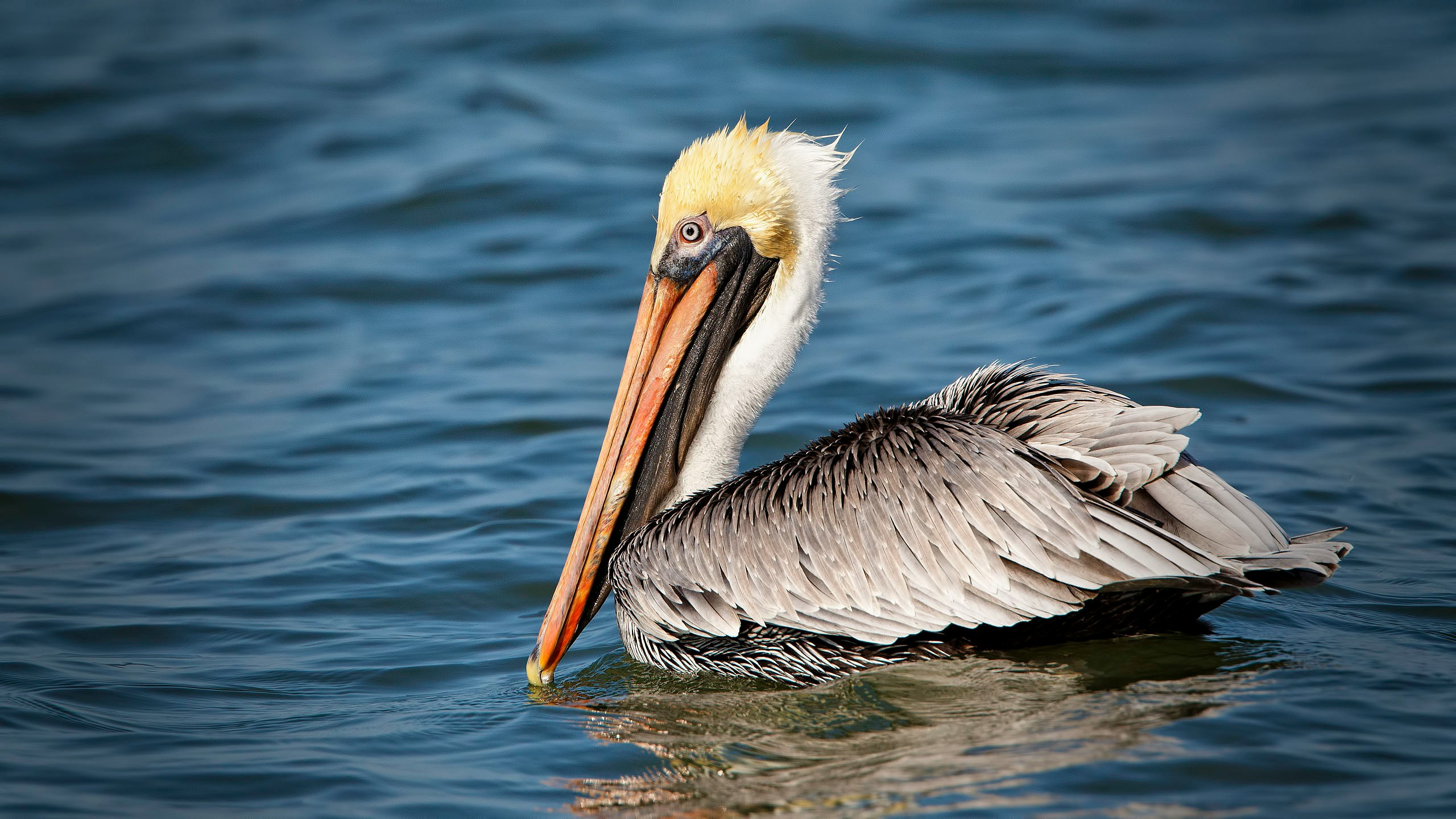
Like bald eagles, brown pelicans were once threatened by the pesticide DDT but are making a recovery. [Credit: Phillip Brown | Unsplash]
Public awareness helped more than just the pelicans, extending to the ecosystems on which they rely. A symbolic species “can really help galvanize people to care and to want to conserve nature,” said Nicholas Mason, an ornithologist who studies avian biodiversity at Louisiana State University.
He said efforts to support the brown pelican also support the broader coastal ecosystems, “which are certainly imperiled here in Louisiana.” In this way, brown pelicans functioned as an “umbrella species,” a concept in conservation where the protection of one iconic species shields others that are subject to similar threats or rely on the same habitats.
The nēnē goose, Hawai’i’s state bird, is another such example. It also made a remarkable comeback from near extinction in the 1950s, when fewer than three dozen lived in the wild. It was designated the official state bird in 1957 and reintroduction efforts have since boosted the bird population into the thousands; it is no longer endangered. Additionally, non-native predator removal efforts to support the nēnē also helped other vulnerable Hawaiian birds.
“I don’t think those efforts would have been as successful if the bird wasn’t made this symbol of recovery,” said Jordan Lerma, executive director of the Nēnē Research and Conservation group.
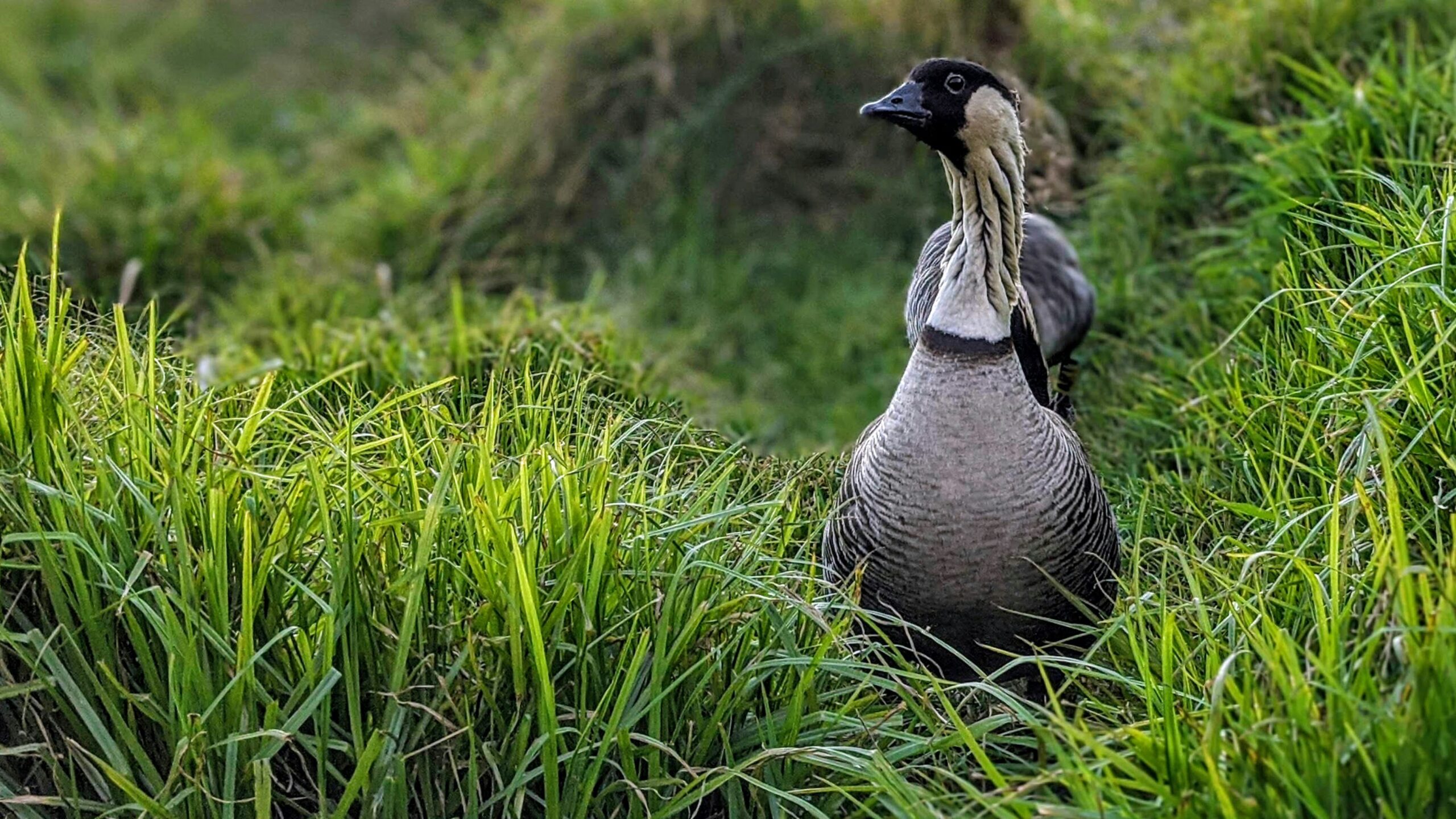
The nēnē goose was once facing extinction in the wild, but now has become an iconic symbol of Hawai’i. [Credit: Lyle Wilkinson | Unsplash]
Like flamingos, Lerma said nēnē have become an admired and familiar species, thanks in part to public education campaigns from the state. “When tourists come to Hawai’i, they recognize nēnē,” he said. The widespread acclaim appears to work on locals too: “We’re starting to see the community recognize the importance of these native species and native habitats,” Lerma said.
The nēnē’s success is now fueling debates about whether Hawai’i should change its state bird to an endangered, lesser-known species that could benefit from the attention. One candidate, the ʻalalā, or Hawaiian crow, has wild populations in the single digits, so its continued survival will require captive breeding programs. Another contender is the palila, a critically endangered Hawaiian honeycreeper with a few hundred wild individuals remaining.
Yet state birdhood is not always enough to help a declining species. The mountain bluebird — the emblem of both Idaho and Nevada — is “not doing so pretty,” said Mark Hauber, an ornithologist at the Graduate Center of the City University of New York. Its population declined by more than 30% from 2007 to 2021, according to researchers from the Cornell Lab of Ornithology.
Nor is the western meadowlark thriving despite being the state bird of six states. “They are one of those iconic state birds whose numbers have plummeted over the last 30 years,” Hauber said. The species faces a host of problems that impact grassland birds, including climate change, habitat loss and pesticide use. Despite these discouraging examples, overall, Hauber said, state bird status can sometimes be beneficial.
In Florida, though, proponents were betting that attention-garnering legislation would be a boon for vulnerable species. In addition to nominating the flamingo as the state bird, the legislation put forward the Florida scrub-jay as the state songbird. The sky blue and gray bird is endemic to the state, meaning it can only be found in Florida, and lives in sandy scrub environments dependent on fire for growth. The species is considered vulnerable due to its unique habitat, which is “rapidly vanishing,” Munguia said.
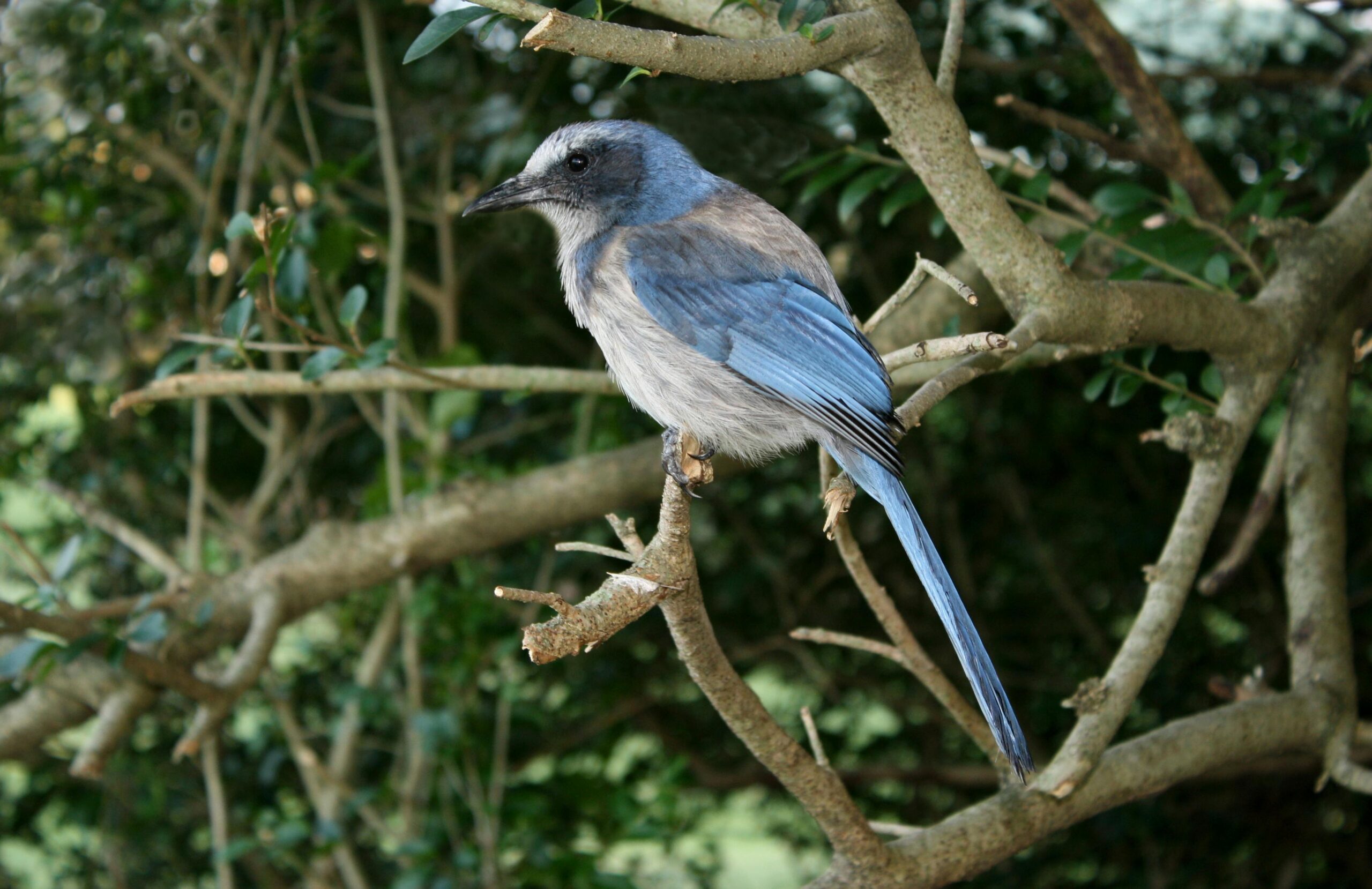
The Florida scrub-jay is endemic to the state and lives in a habitant reliant on fire. [Credit: Michael Hamments | Pexels]
While the state songbird designation would not have protected the species from encroaching development, Munguia said it would have been “a symbolic gesture,” one that shows Florida is “aspiring to be a state where a species like this can continue to have a foothold.”
Mason hopes Florida’s strategy will catch on in other states with “uninspired” state birds. “It’s a missed opportunity by states to highlight birds that are either of conservation concern or that are kind of unique and symbolic of the ecosystem,” he said.
Filed To
Share
About the Author

Madeline Shaw
Madeline is a New York-based journalist who covers a wide range of issues at the intersection of science, health and the environment, with an emphasis on conservation and biodiversity. Her work has been published in The New York Times, Inside Climate News, Mongabay and elsewhere.
7 Comments
Madeline, if you dig a little deeper, you will find that the mockingbird is actually not the state bird of Florida. It passed the Florida Senate, but not the Florida House of Reps in 1927. So, if you read Chapter 15 of the Florida Statutes, Florida doesn’t actually have a state bird. In actuality, the Flamingo now has equal claim to the title by passing the Florida House Reps. And the Florida Scrub-Jay has as much claim to the title of Florida State Songbird as either of the others do to the title of State Bird. My students have been trying to rectify this for the past 25+ years.
Good article showing how state birds can boost conservation awareness. Do you think symbolism really helps protect species?
It’s really interesting how the article mentions Hurricane Idalia blew hundreds of flamingos into Florida. You’d think a hurricane would be all bad for wildlife, but it sounds like it actually helped kickstart their return in a way, even if it’s still precarious.
There needs to be greater awareness of biodiversity conservation, especially for species that have been listed in the Red Book.
The part about the brown pelican being declared state bird even before breeding pairs returned to Louisiana really stuck with me. It’s wild to think that symbolic status came first, and then the actual conservation followed.
It’s fascinating how a symbolic species can encourage people to care more about nature. Education and community support are just as important as scientific conservation programs.
I grew up in Louisiana and never really thought about how much the brown pelican’s status mattered until I read this—it’s wild to think that just designating it as the state bird helped push real conservation efforts forward. The umbrella species idea makes so much sense, but I wonder if it works for every state or just the ones with really iconic birds.