Ear infection? A new AI model may have the diagnosis
New study finds that an AI tool can diagnose ear infections in children, leading to further research on at-home use
Bela Silverman • October 31, 2026
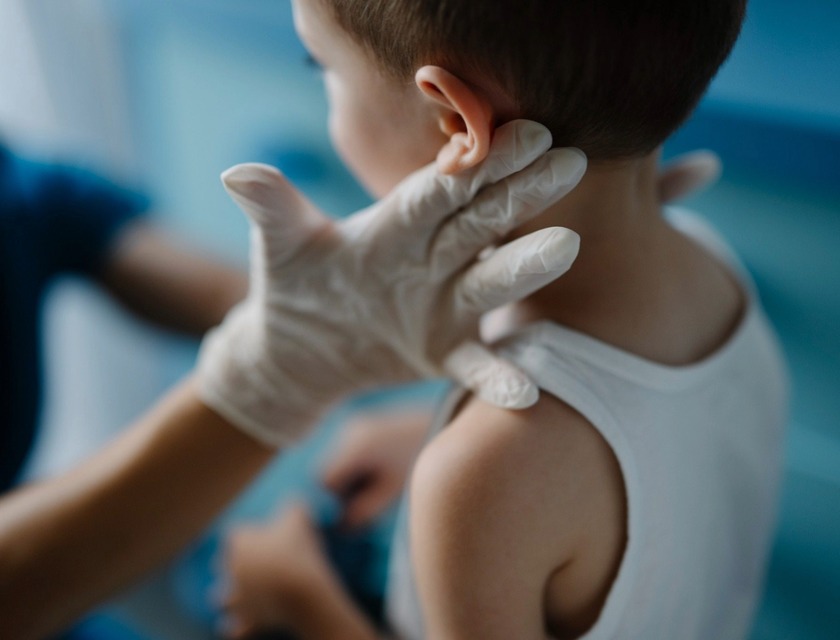
A new AI tool is working to diagnose otitis media, a type of ear infection contracted by nearly 80% of children. [Credit: Nenad Stojković | Wikimedia Commons]
A new AI tool can help rule out ear infections in young children, according to a new study, assisting doctors in diagnosis and allowing researchers to further test its abilities at home.
Researchers at Turku University Hospital in Finland trained the computer model to sort images taken with a digital otoscope into two researcher-defined categories: “abnormal” or “normal.” The AI classifier identified more than 750 eardrum photos of children between six months and three years old.
To measure the model’s performance, the researchers created a “gold standard” of three physicians — two ENT specialists and one pediatrician — who analyzed the same images as the AI model. The physicians were unanimous in their diagnoses and found that, compared to their standard, the classifier was 92% accurate in identifying acute otitis media. This is a common ear infection that can result from complications of upper respiratory tract infections, spreading behind the eardrum.
There’s a catch, though. The tool needs a clear image to operate accurately, and with kids, who almost never sit perfectly still, this isn’t always an option.
“Around 70% to 80% of children get otitis media at least once during their life, and for a lot of kids susceptible to it, they may get it five to six times per year,” said pediatrician Dr. Simo Nuuttila, one of the study’s lead authors.
While children commonly contract otitis media, it can often go unnoticed. “For young children who aren’t able to express what ear pain they are feeling, infection can get really bad, potentially puncturing or rupturing the eardrum,” added Nuuttila.
To determine whether the classifier could accurately screen for infection without a doctor’s guidance, the researchers created a baseline using 3,000 images labeled by a panel of seven ENT specialists.
The model relies on the images it was trained on to diagnose an infected ear, Nuttila said, which can limit how well it can interact with unfamiliar images. If an angled or outdated image is used, it could lead to an inaccurate diagnosis, so this tool can’t fully replace a doctor, but it can serve as a rule-out if the image quality is good.
Researchers including Dr. Matthew Crowson, a surgeon at Mass General Brigham Eye and Ear in Boston and a professor at Harvard Medical School, are developing other AI models designed to address that limitation.
Crowson explained that if you’re a parent at 10 o’clock at night with a squirmy 3-year-old and a potential infection, you have to build images into your data that are “off-angle or blurry or too zoomed out or too zoomed in.”
His research team intentionally included some poor-quality photos in their dataset, programming the model to prompt the user to retake a digital otoscope photo or to “clean ear.”
When asked about the effectiveness of Nuttila’s testing, Crowson said, “Their outcome labels were just abnormal [and] normal for the ear condition. Because you can have an abnormal ear, that doesn’t necessarily have or need or require antibiotics for an infection… It’s not as clinically useful to have a binary abnormal or normal.”
Nuuttila’s team noted that the classifier originally had 96% accuracy in identifying “abnormal” ears, but it dropped to 92% after multiple images were too unclear for the device.
Now, Nuuttila’s research is expanding to see how the model may work for parents. Out of 40 families in Finland, half have received digital otoscopes that can take images of their children’s eardrums at home. Researchers will then run those images through the AI model to see how accurately it can classify photos taken without a physician.
Still, Crowson cautioned that as this AI tool progresses into at-home testing, parents should confirm all diagnoses with telehealth physicians.
“Maybe the parents have the actual technology at hand, or they have the app on their phone, but it’s only completed in the context of a telehealth encounter,” Crowson said.
Filed To
Share
About the Author

Bela Silverman
Bela Silverman is a science journalist based in New York City with a background in climate science. She covers issues within the realm of science, health, and the environment, with a focus on climate justice and conservation.