“Stomping out” a species that is here to stay
Spotted lanternfly are a reminder that we need to get more comfortable sitting with the things we can’t control
Isabel Gil • April 20, 2026
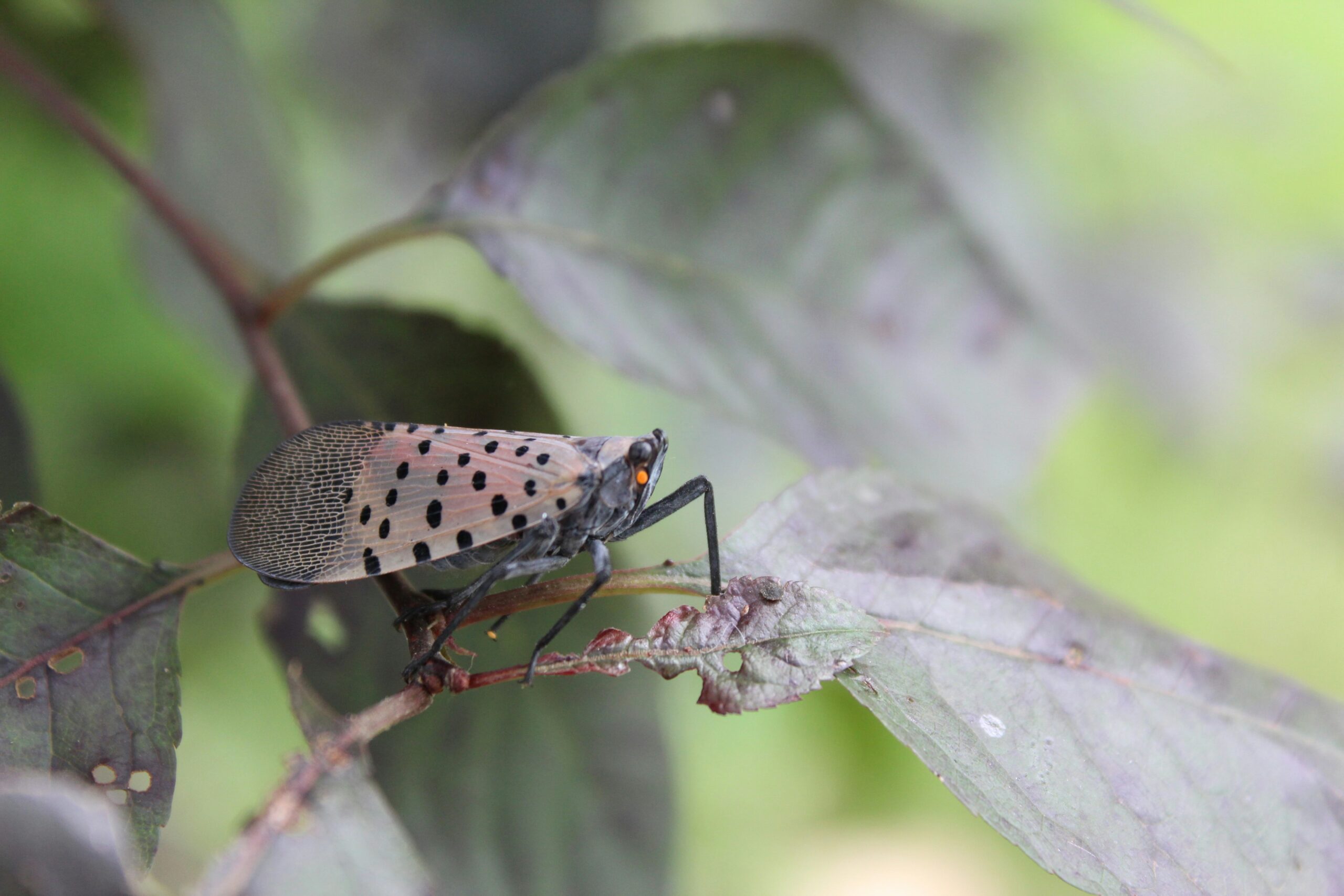
When I moved to New York City last summer, one of the first things I noticed was the fervor with which East Coasters are trying to stomp out invasive spotted lanternflies.
These bugs were detected in the United States in 2014 and made their way to New York during the pandemic.
As their range continues expanding, they’re causing agricultural damage. According to a worst-case scenario estimate from the New York Department of Agriculture and Markets, the spotted lanternfly could cost the state up to $300 million each year.
To this day, they’ve been at the center of widespread media campaigns urging people to stomp them out.
I wanted to know where this whole stomping idea came from and how New York got to this point. I also couldn’t help but wonder — have we been talking about spotted lanternfly all wrong?
(Scienceline intro music) Sarah Hofmann: Hello! And welcome back to Scienceline. I’m Sarah Hofmann, the digital editor, and for this episode, Isabel Gil is going to tell us about lanternflies, the popular campaign to stomp out the invasive species, and the more nuanced perspective that some experts are now adopting. If you enjoy this piece, please keep up with Scienceline and its intrepid staff of grad student journalists by signing up for our email newsletter, subscribing wherever you get your podcasts, or by following us on Instagram, Bluesky or X (the website formerly known as Twitter). Here’s Isabel. (field tape) Isabel Gil: I’m at Grand Army Plaza in Brooklyn. This is the spot where it happened. (music) I moved to New York in August, and it was my first day officially alone. I was on a walk when I saw it scuttling across the pavement. The way they move reminds me of something out of a horror movie. I remember it jumped at my legs, and it was so much larger than I expected. I knew it was invasive. And without really thinking, I just… stomped on it. (field tape) Gil: And I remember I was looking at this flattened bug on the ground, when all of a sudden, this woman skidded her bike to a halt next to me. Costa Sideratos: Oh my gosh! Gil: And she hopped off her bike, gave me this really crisp nod, and said, “good job doing your due diligence!” Sideratos: Welcome to New York I suppose… Gil: Costa, my boyfriend, was actually the first person to teach me about spotted lanternflies. He’s from Long Island. Do you remember the first conversation we had about them? Sideratos: Yes, oh my gosh, I remember it, it was when I was outside of work walking down the sidewalk, and I saw one right along the street! Gil: Yeah, and then you stomped on it right in front of me on Facetime! I remember telling you, I think, that it made me feel weirdly uncomfortable. I’ve been involved in invasive species removal efforts before in my life, but it seems like this fervor that East Coasters have for killing spotted lanternfly is unlike anything I’ve ever experienced before. Sideratos: I agree! (end field tape) Gil: I wanted to know where this whole stomping idea had come from, and how New York got to this point. I also couldn’t help but wonder — have we been talking about spotted lanternfly all wrong? (music) Spotted lanternfly were first seen in the U.S. in Pennsylvania back in 2014. Now they’ve spread to 18 states. Scientists think they snuck in with a stone shipment from China. Brian Eshenaur: Yeah, they are an attractive insect, there’s no denying it. You know, with that red-orange underwing. That’s Brian Eshenaur, an invasive species specialist at Cornell University. He’s been studying spotted lanternfly since they first arrived in New York. Eshenaur: I would say the big “oh shoot” moment was when vines were killed in vineyards due to spotted lanternfly feeding. Gil: Right away, people freaked out about their numbers, and worried about how they could decimate New York’s agricultural industry — especially wine. Fun fact, spotted lanternflies love grape vines! The spotted lanternfly could cost the state up to $300 million each year—that’s according to a worst-case scenario estimate from the state Department of Agriculture and Markets. And in New York, the insect’s range is still expanding. This year, they pushed even further upstate, more showed up out east throughout Long Island, and they moved farther west towards Lake Erie. Since the bugs showed up in New York during the pandemic, Brian said people have been trying to get rid of them. From fire, to chemical concoctions, and of course, stomping, people have been trying it all. Eshenaur: You know, “see it, stomp it” — that message is out there. It’s online and so I think people know that this is an invasive species. People feel like they’re doing a good job by stepping on spotted lanternfly and killing them. (music) Gil: The stomping campaign was started in the state’s Department of Agriculture. At the time, some staff sat down to do the math. Since a female lanternfly can have about 50 eggs in a batch and 2 batches in her lifetime, stomping on one single female lanternfly could theoretically reduce next year’s population by up to 100. The messaging is still going strong. In August, the department posted a meme with a spotted lanternfly with lasers coming out of its eyes. “Spotted Lanternfly are the WORST,” said the caption. “Do your part and STOMP THEM OUT!!!” Brian said at first, it was great seeing people get excited about protecting their ecosystems. Now, he’s a little worried this movement may have some unintended consequences. Eshenaur: There’s just a little concern, though, that we’re training our young students that when they see an insect to destroy it, and of course, the vast majority of insects are really crucial for our ecosystems and are beneficial. (music) Gil: With all of this, I’ve been thinking about spotted lanternfly a little bit differently, too. Eva Roos was one of the first people to inspire my reconsideration of how we talk about invasive species. Eva Roos: Just as when people migrate to a new area, the way you come into relationship or feel at home in a new place or community is to understand your role in this new place. Gil: I met her a few years ago in northern Michigan. She teaches a college class at the University of Michigan Biological Station about learning from the landscape. She teaches her students how to explore their surroundings through the lens of other people, organisms and Indigenous history. A lot of her students come in with ideas of mainstream, western conservation, which often uses what she calls “alien ideology” — language that mirrors anti-immigrant rhetoric, like — Roos: — they’re alien species, they’re invading, you know, they’re from somewhere else. Gil: So, each year, she teaches her students to reframe their thinking. She has her class read “Anishnaabe Aki,” an academic paper looking at invasive species with an indigenous viewpoint. The paper urges people to leave room for nuance when thinking about non-native species. It points out that invasive species aren’t the main problem that we’re all facing. They’re symptoms of much bigger, complicated things like consumerism and colonization. Roos: It’s so much easier if it were that simple, you know, to just be like, “spotted lanternflies? Bad!” It’s not necessarily just as simple as going to war on these species, but instead there’s an opportunity for learning. Gil: She says that the best-case-scenario is that when non-native species come into a new range, people won’t just see it as a chance to squash the problem — literally. Instead, they’ll take the chance to learn more about the nature that surrounds them, how these new creatures fit in and more closely pay attention to their surroundings. Roos: When a species is considered invasive, it’s an opportunity to ask: what can we learn from the fact that this population has arrived? What does it tell us about our own imbalance with the world… that’s a much bigger thing to take on rather than just saying to, whenever you see the bug, squash it. (music) Gil: Similarly to how Eva shifted my viewpoint about invasive species, Brian said scientists are also starting to shift the way they’re thinking about spotted lanternflies on the research side of things. Even though the bug’s range is expanding, Brian revealed that the spotted lanternfly population might be leveling off in New York City, according to observations. And it’s not necessarily due to all the stomping. Instead, he said, it’s more likely a result of scientists better understanding and managing the tree-of-heaven, a non-native plant that is the spotted lanternfly’s favorite snack. He also said that another driver of the apparent population decrease is that the spotted lanternfly are actually becoming snacks themselves. Eshenaur: We think some of that decline is due to other insects and birds that will feed on spotted lanternfly. In nature, no food source goes ignored. Gil: I was shocked to hear this. These are signs that the spotted lanternfly’s relationship with our ecosystem is so much more complex and dynamic than I initially thought. And while we can’t strictly rely on native predators to control non-native species, this suggests that the spotted lanternfly’s role in our environment might be settling into something a bit more familiar. Eshenaur: You don’t wanna have it be a hitchhiker on your car, you do want to kill it. But when it reaches its full range, and we’re not concerned about spreading it anymore, then it will become more normalized. It will be one of those insects that kids growing up with will just be familiar with. Gil: I feel like a part of me was expecting spotted lanternfly experts like Brian to be really fired up and just as passionate about killing the bugs as the public seems to be. But instead, they talked about the bugs like they’re a coworker who’s kind of a piece of work — one you have to stay on your toes around, but ultimately have to learn to coexist with. (music) So in all of this, to manage non-native species, you have to really intimately know them. And getting to know these bugs makes me feel like I’m getting to know a part of New York City, my new home, much more intimately than before. Spotted lanternfly are a reminder that we need to get a little bit more comfortable sitting with the things we can’t control, and thinking about the things we can. We can nurture the native species that could keep spotted lanternfly in check. We can support research about all of the species that we share an ecosystem with. (music) We can listen to the experts, and learn how to prevent something like this from ever happening again. We can work on getting a little bit less creeped out when we see them scuttle across the pavement, because we can’t expect them to go away. And then — if it really does something for you — you can take a crack at stomping. For NYU’s Scienceline, I’m Isabel Gil. (Scienceline outro music)
MUSIC: Slimheart [Blue Dot Sessions] | Thimble Rider Theme [Blue Dot Sessions] | The Cornice [Blue Dot Sessions] | Scienceline theme by Jahzzar at the Free Music Archive
Filed To
Share
About the Author

Isabel Gil
Isabel Gil is Brooklyn-based science and health journalist. She is interested in covering creative solutions that emerge at the intersection of science and the public. She previously reported for NPR affiliates WGVU and Michigan Public, where she covered Great Lakes research, invasive species, health policy, and more.
1 Comment
Thanks for sharing this, very helpful. Özellikle detaylı perspective hoşuma gitti.