Anne Carson wins Nobel Prize in Literature for her genre-bending writing
Canadian poet Anne Carson was recognized for playful, ironic works that interweave the classical and the contemporary
Saskia Grisaru • October 8, 2026
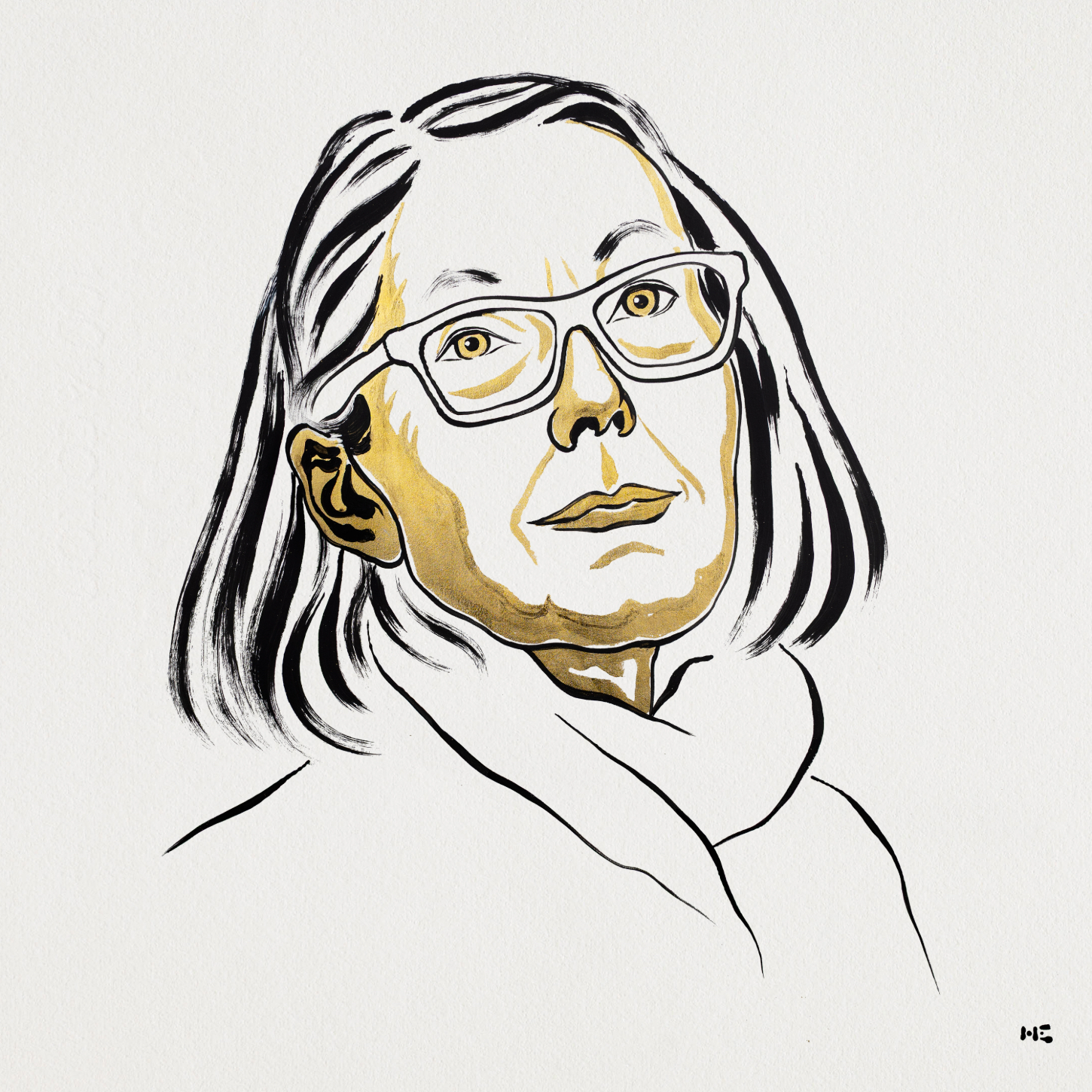
An artist’s rendering of the Canadian writer Anne Carson, who has won the 2026 Nobel Prize in Literature [Credit: Niklas Elmehend | © Nobel Prize Outreach]
At the same hour that she was being awarded the 2026 Nobel Prize in Literature by the Swedish Academy in Stockholm, the Canadian poet, essayist and scholar Anne Carson was sweeping the floorboards of her home in Reykjavik, Iceland, and ignoring the calls blowing up her phone.
Lauded for what the jury described as a “bold and inventive oeuvre” that “has created new forms for contemporary literature,” Carson sounded surprised, but very happy when she eventually gave the Nobel Prize Committee a call back, said Ingrid Carlberg, the Swedish Academy’s permanent secretary at the Nobel press conference.
Born in Toronto in 1950, Carson’s life was marked indelibly when she began to study ancient Greek in high school. Carson is an academic at heart, and the classical tradition has shaped her work as a teacher, translator and writer. With her first book Eros the Bittersweet (1986), she founded her own classical tradition, unearthing ancient stories and characters and painting them with her inventive, genre-bending brush.
Her “often-unexpected literary constellations” at once tie Carson to and free her from the bounds of classical stories, according to the chair of the Nobel Committee for Literature Anders Olsson. In her lyrical poem “The Glass Essay,” Carson interweaves the narrative of a woman visiting her mother in northern Canada with the words of Emily Brontë, whose books the woman is reading. The result is a meditation on loneliness, grief and poetry shepherded along by these three solitary women.
“Most people read the Autobiography of Red, it seems to be accessible,” said Carson in an interview following the prize announcement. The 1998 novel in verse plucks the characters of Herakles and Geryon out of ancient legend – Herakles the hero, Geryon the three-bodied giant from whom he steals cattle and slays – to place them down on a modern-day island in the Atlantic, then in Buenos Aires, then Peru. The two fall in love, are torn asunder, come back together and so on. Autobiography of Red drew strong and positive reactions at the time of its publishing; the Nation critic Bruce Hainley described the poem as “a brilliant book about desire, the ancient Greek poet Steischoros, volcanoes and the joyful brutalities of seeing and blindness,” and Carson herself as a “philosopher of heartbreak.”
Despite her devotion to ancient stories, Carson is a deeply modern author, said Steve Sem-Sandberg, a writer and member of the Swedish Academy. “She connects our contemporary mores, ways of living, always through the antiquity,” he said at the ceremony. “The mixture between those two gives an enormous energy to her writing. Nobody writes like her, and nobody would even, I think, dare to do this in this way.”
Over her four decades of creation, Carson has played within and ventured beyond the bounds of the literary form. She has collaborated with visual artists and choreographers, directors of opera and theater. Since the 1990s, her work has had “outstanding importance” for the international art and literary scenes, Olsson said.
Her most recent book of poetry Wrong Norma and her essay “The Gender of Sound” were published in 2024 and 2025 respectively. Carson spends her time between Iceland and Ann Arbor, Michigan, with her husband and collaborator Robert Currie.
“Carson once described boredom as her arch enemy,” Olsson said. It’s a foe that she battles “with drastic humor and wit.”
Filed To
Share
About the Author

Saskia Grisaru
Saskia is a science journalist currently based in Brooklyn. She has a background in forestry, environmental and climate sciences, and also linguistics.