Millions of children still unvaccinated worldwide
A new global analysis shows vaccination rates have stalled, leaving more than 15 million children with no immunizations in 2023
Alissa de Chassey • January 13, 2026
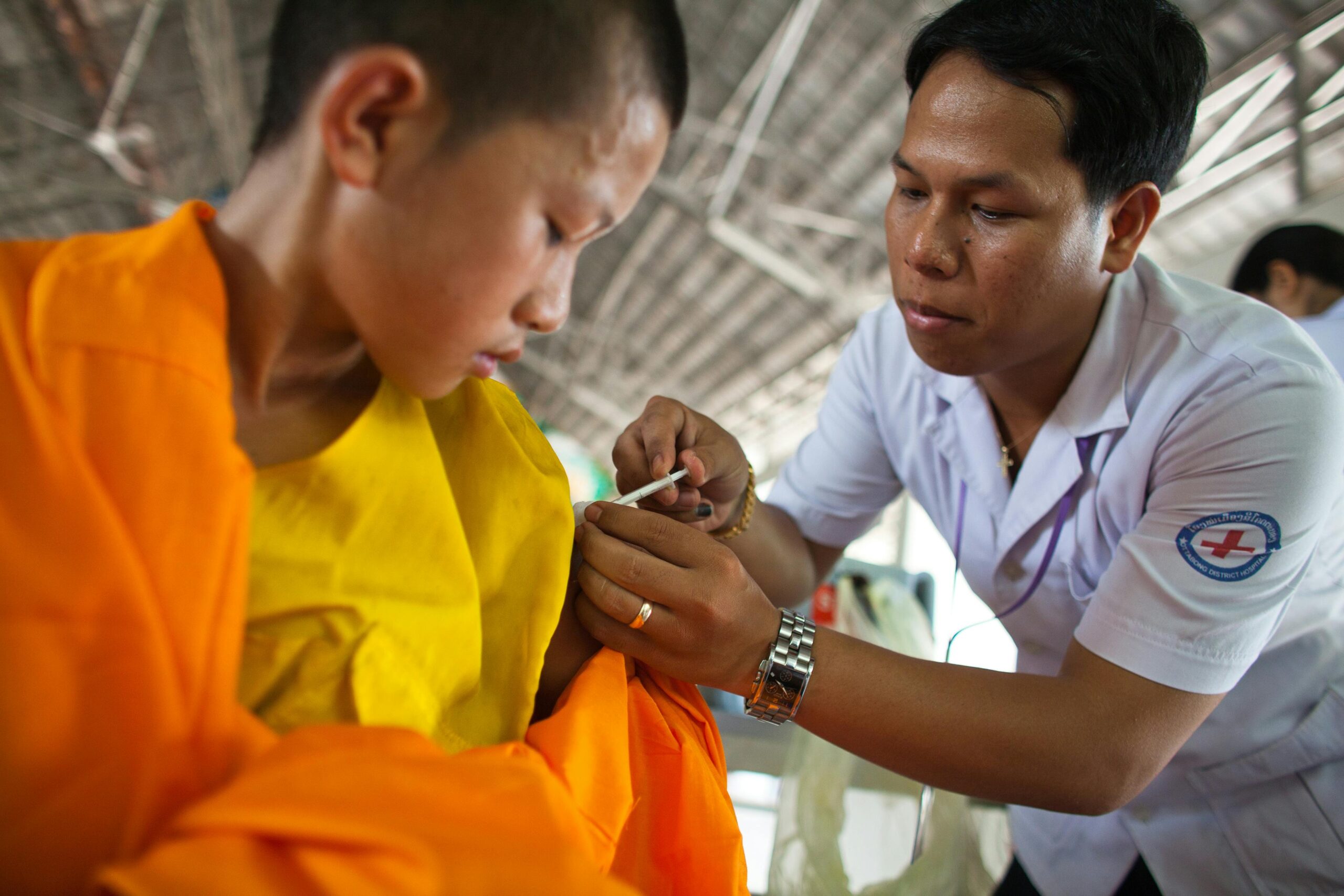
A child receives a vaccine dose as a new global analysis shows millions of children worldwide are still missing shots. [Credit: CDC | Pexels]
Worldwide, 15.7 million children received no vaccine of any kind in 2023, according to a new study published in the Lancet.
Researchers from different institutions including the WHO combined survey data, country-reported administrative records and reports on vaccine delivery disruptions into a single statistical analysis of more than 8,000 data sources covering the years 1980 to 2023. “We wanted to contextualize global childhood vaccination trends,” says Emily Haeuser, researcher at the University of Washington and co-author of the study.
The study concludes that without major changes, the global vaccine coverage will not meet the WHO’s 2030 goal of fully vaccinating 90% of children worldwide.
“The vast majority of zero-dose children around the world are highly concentrated in just eight countries, such as Nigeria, India or Ethiopia,” Haeuser says.
Several structural and social hurdles explain this phenomenon, according to the researchers. First, strong infrastructure and supply chains are needed to deliver doses. “COVID-19 definitely worsened the situation, especially in regions like sub-Saharan Africa, where supply chains and access to care were already fragile,” Haeuser says. In 2023, Nigeria had the world’s highest number of zero-dose children, more than 2 million, the study finds.
Additionally, “health care facilities must be accessible, people need to be able to reach doctors,” Haeuser says.
Finally, “parents must want to vaccinate their children, because they believe vaccines are safe and effective,” she says.
In the study, coverage for routine vaccines (such as measles or polio) rose from around 40% to more than 80%. “Most parents do still trust vaccines,” Hauser says. “It’s important, as we talk about hesitancy, not to lose sight of that.” However, gaps persist.
Zero-dose children aren’t only found in low income countries. In the United States, the study counted 166,306 of these children in 2023, 1.8 times more than in 2019.
“In the U.S., the biggest technical barrier is the shortage of pediatric providers in rural areas,” says Jennifer Reich, a professor of sociology at the University of Colorado, Denver, and author of “Calling the Shots: Why Parents Reject Vaccines.”
American parents can also obtain vaccine exemptions: religious, medical or even philosophical, depending on the state. Yet, “the number of people who say they’re using religious exemptions exceeds the number of people who say they’re religious,” Reich says.
These exemptions reflect broader attitudes toward vaccination, Reich says. “Some people perceive vaccines as a consumer product,” she says. “They believe they should decide whether it is relevant for their own child.”
“As some parents argue, ‘How would my children present a risk to your children? Because if vaccines work, your children should be fine,’” she says. The WHO argues that vaccination is not an individual choice but a collective safeguard, protecting those with weakened immunity, older adults and other vulnerable groups.
For the United States and other high-income countries, reducing the number of zero-dose children “has to work through the communities,” Reich says. “We don’t usually talk about our children or ourselves being vaccinated the day before, but community conversations can change that.”
Filed To
Share
About the Author

Alissa de Chassey
Alissa de Chassey is a French science journalist based in New York City. She previously worked for Le Figaro and covers biology, health, and AI.