Trump’s EPA to ignore economic benefits of clean air, focusing only on costs to polluters
A new agency rule retreats from cost-benefit analysis in calculating impacts on human health, imperiling improvements in air quality, experts say
Avril Silva • April 13, 2026
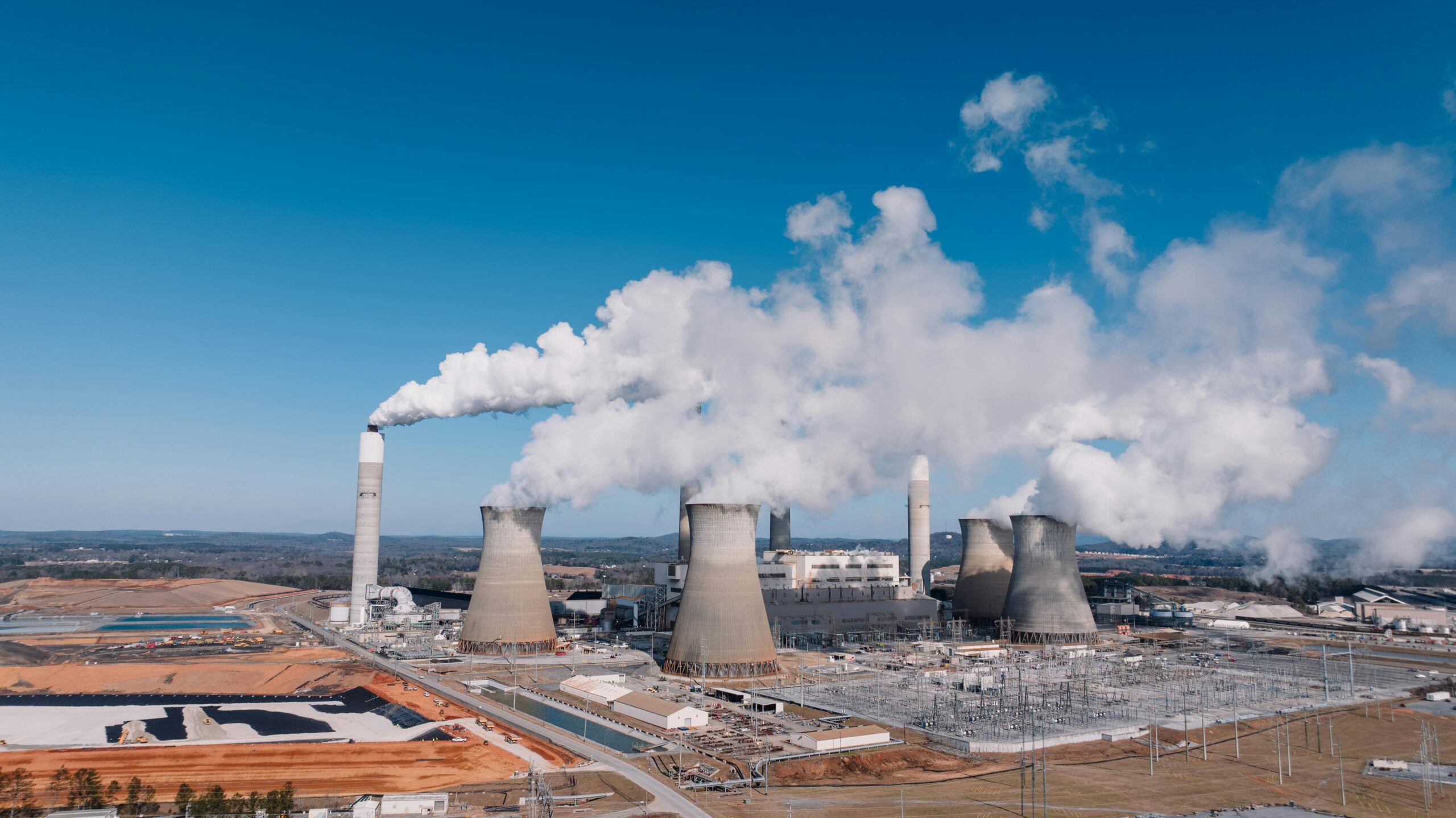
The EPA is ending the cost-benefit analysis of pollution reduction on human health from industrial sources like this power plant in Euharlee, Georgia. [Image Credit: Kelly at Pexels]
You’ve got to look at page 216 of the Trump Administration’s latest revisions to the federal Clean Air Act to understand why advocates are so disturbed.
That’s the place where the U.S. Environmental Protection Agency declares it will no longer consider the economic benefits of cutting air pollution — only the costs to emitters.
Manuel Salgado, a researcher at the Harlem-based WE ACT clean air advocacy group, calls the EPA move a betrayal that could reverse decades of progress in reducing emissions for a host of pollutants. He said it is starting with sulfur dioxide and nitrogen oxides, or NOx, both of which have been linked to a wide variety of lung and heart conditions. Sulfur dioxide is also the prime cause of acid rain, which is formed when air pollutants mix with water in the atmosphere and damages forests and waterways.
“It’s crystal clear,” Salgado said. “We have so much evidence and documentation of how bad NOx is for public health, so what I see is a rule come out that doesn’t do that. It goes in the opposite direction of where you would need to go.”
The EPA issued new standards for NOx and sulfur dioxide emissions from industrial sources in January. The standards lower the emission limit for some facilities to as low as 15 parts per million, which the agency projects will cut annual NOx emissions by up to 296 tons by 2032. That may sound like a lot, but it’s only about 0.001 percent of the over 29 million tons of NOx released in the last five years.
The proposed emissions cut is 90 percent less than what the Biden Administration had proposed in 2024. Trump’s new rules also grant an exemption for so-called “temporary” gas turbines that are increasingly being deployed across the country to serve data centers or deliver power at times of peak demand, such as midsummer.
In an email statement, the EPA said it would still consider human health impacts in setting its air pollution rules, even without formally calculating the economic benefits of healthier air.
“The Biden administration also didn’t monetize many air pollutants in their rules. No one questioned if they were following the agency’s core mission of protecting human health and the environment. Not monetizing does not equal not considering or not valuing the human health impact,” the EPA statement declared.
In actuality, though, the Biden administration did quantify human health improvements to justify stricter standards, as with its 2024 soot reduction rule, which boasted $46 billion in projected health savings. Using cost-benefit analysis, Biden’s EPA claimed the rule, which remains in effect for now, would have cost affected industries $590 million. That’s a benefit-to-cost of nearly 80 to 1, while also cutting emissions by 25 percent and preventing up to 4,500 premature deaths.
Biden’s EPA also updated the government’s official “rulebook” for cost-benefit analysis to make it easier to count long-term health and climate benefits.
Trump’s EPA is “moving backwards when other countries are tightening NOx standards to improve health,” said Rob Jackson, an ecologist at Stanford University.
The World Health Organization and Canada have each recently endorsed tough indoor NOx standards as low as 11 parts per billion. Meanwhile, the US has yet to enforce any standards for indoor NOx emissions.
Although Jackson’s research has focused on the impact of NOx indoors, he said that any exposure, whether from a factory smokestack or a gas or propane stove indoors, can exacerbate asthma and other respiratory problems.
Trump’s EPA still acknowledges that pollution from factories and power plants can affect the health of nearby communities, which tend to have lower incomes, less education or higher proportions of racial minorities, especially in communities in the South.
Gibson Ofremu, an environmental analyst who works for a company that would be affected by the rules takes a middle path on the controversy. Ofremu thinks the Trump rules will further drive down emissions if they are strictly enforced, but also says NOx can do harm at concentrations below 15 parts per million. He works for Caliber Collision, which owns more than 1,800 auto-repair shops in the U.S.
“The law should be more strict because if it’s not, people are going to be complacent,” he said, noting that NOx is a precursor to ozone smog, which can damage lung tissue.
It’s not a simple calculation to estimate the financial benefits of improved health, though researchers have employed a variety of factors to do so, including avoided hospital costs, improved worker productivity and longer life spans. Those analyses have frequently shown that the financial benefits of pollution controls vastly outstrip the costs to polluters. For example, an EPA study of the first 20 years of the 1970 Clean Air Act found that while polluters spent $523 billion on technology, the public saved $22.2 trillion in health and productivity gains. That is a return of $42 for every dollar spent.
“You can’t even make the argument that these [Trump Administration] actions are motivated by wanting to have a better economic outcome, because there is a lot of literature that shows that we see increased health costs, that they multiply and have larger economic costs than the upfront costs that are saving for the oil and gas companies,” said Salgado of WE ACT.
Beyond the details of the new NOx rule, Salgado wants the public to pay attention to the broader impact of the Trump Administration’s relaxation of pollution rules, including repealing the 2024 Mercury and Air Toxics Standards, rolling back vehicle emission standards and withdrawing a proposed rule that would have limited PFAS from manufacturers from entering waterways.
“The easiest way to think about it is, if you’re raising a child with asthma, how much NOx is acceptable to you?” says Salgado.
Filed To
Share
About the Author

Avril Silva
An award-winning journalist, Avril has experience covering environmental and public health policy and is interested in pursuing investigative journalism. You can find more of her work on CBS News, POLITICO’s E&E News, and more.