These advocates are addressing the gap in your sex education
While the United States does not mandate menstruation education in schools, workshops and pediatricians might have the answer to educating young menstruators
Avril Silva • February 9, 2026
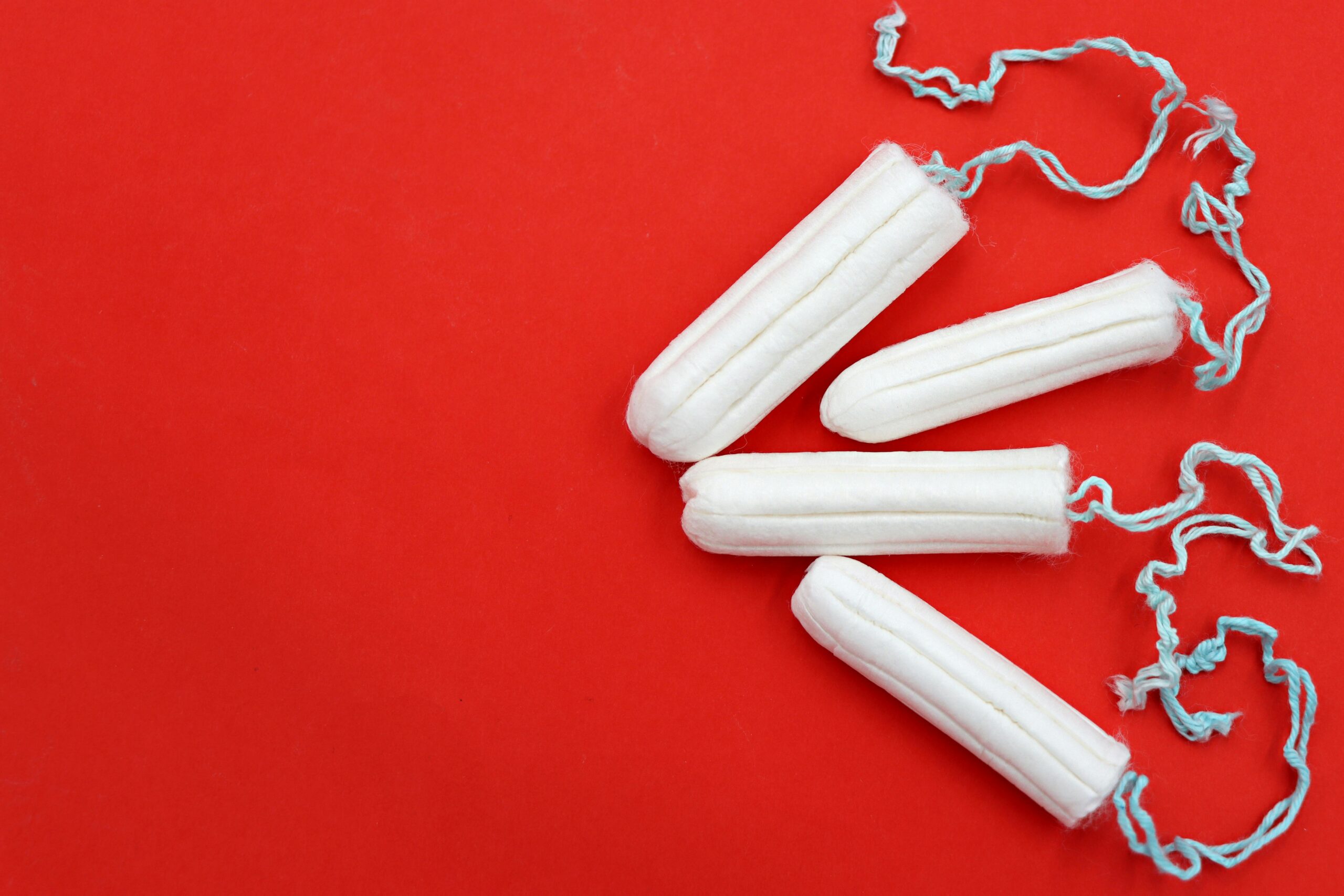
Advocates are working to fill gaps in sex education related to menstruation. [Credit: Marta Branco | Pexels]
Hannah Chiu might only be a medical student at Tulane University, but she is using her platform to make sure young menstruators know everything from how to use a tampon to birth control options.
With only 29 states mandating any form of sex education, Chiu joins the many people around the country looking to teach about menstrual periods, a topic that is not federally required to be taught in sex education curricula and often goes overlooked.
From Trish Hutchinson taking up-and-coming doctors into the classroom, to Andrew Lupo, a pediatric gynecologist, teaching his patients firsthand, discover the ways menstruation education is reaching young people when they need it most.
Update from October 2025 taping:
Period Prepared is a menstruation education program co-founded by Hannah Chiu and Olivia French, both medical students in New Orleans, and their mentor, Dr. Stephanie Shea. The interview features Hannah Chiu and reflects the work of the organization as a whole.
As of February 2026, Chiu is still working within the menstrual education space, but is not using Period Prepared branding.
(Scienceline intro music) Sarah Hofmann: Hello! And welcome back to Scienceline. I’m Sarah Hofmann, the digital editor, and today, Avril Silva is here to report on menstruation education in schools, how it’s falling short, and what some physicians and experts are doing to get young people the information they need. If you enjoy this piece, please keep up with Scienceline and its intrepid staff of grad student journalists by signing up for our email newsletter, subscribing wherever you get your podcasts, or by following us on Instagram, Bluesky or X (the website formerly known as twitter). Here’s the story. (Taped in October 2025) Hannah Chiu: I got my first period when I went away for church camp, which was one weekend long, and it was my very first time. I was in seventh grade, so it was my very first church camp, and I woke up that morning, rolled out of my sleeping bag, and I like, I literally was like, I think I just got my period. Avril Silva: This is Hannah Chiu, a med student out of Tulane University. Like almost every menstruator, she vividly remembers the mortifying start of her period. And Hannah was lucky. She knew a lot about what to expect from talking to her older sister and her mom. But she’s about to close up her time in med school now. And after her pediatric rotation, she realized lots of people don’t get that. And she’s part of a growing movement to change it. More than a decade after that weekend in church camp, Hannah’s become a menstruation educator, teaching kids in Louisiana about what to expect from their periods with her organization Period Prepared. This is Avril Silva, and today, we are taking a look at menstruation education: what it is and what Hannah and others are doing to bring it to young people around the country. You might be asking: What’s the point of teaching people about their periods when sex education can cover it? The problem is: it usually doesn’t. Trish Hutchinson is a pediatrician who helped create the Period Education Project, an organization that trains med students to teach young people about menstruation. Educator at a Period Rally: So who’s ready to cheer about periods? (CHEERS) Educator at a Period Rally: Ok ok good we’ve got some cheers. Silva: She says that there is a lot of work to do to expand menstruation education across the country. Trish Hutchinson: If you look at menstrual health education across states, policy wise, there’s only about two or three states that have any policy that menstrual health education should be included, and it’s Oregon, Nevada and California just recently, recently passed. But what’s interesting is only 29 states mandate sex ed, which doesn’t mean mental health education to happen, but only 20 of those states require it to be medically accurate. So I’m not quite sure what states are doing, and it really is state-by-state. Silva: And the stakes on a kid’s physical and mental health are high. When schools or doctors don’t know how to teach kids about their periods, it can be devastating, and Trish has seen the consequences firsthand. Hutchinson: One moment that really shifted my perspective on menstruation: the education round. It happened early in my career as a pediatrician, because I was seeing a young girl who was 11 for the first time, so I was unable to track her body changes related to puberty. So I had asked her if she’d started her period, and she kind of said no, but she had a funny look on her face, and I did know this family, like I said. And so I asked her if she knew what a period was, and she finally said no. And then her mother looked so mortified that her daughter didn’t know what a period was. And once I explained to her, she started crying, because she says it happened to her twice, and she thought she was dying. And then the mother was crying too, because she just didn’t know how to talk to her daughter about it. So I remember leaving the exam room that day thinking, “We can do better than this for our kids.” Silva: Trish founded the Period Education Project with another physician. Their goal is to bring menstruation education outside the classroom and into the exam room by involving up and coming doctors. Trish says that even in med school, providers aren’t getting what they need to help their patients understand menstruation, and this helps to fill the gap. Hutchinson: Menstrual health education is really inconsistently taught even in medical school curriculum, and we want to create better future doctors that come out into the world that are knowledgeable, confident and empathetic to talk to their future patients about periods, and so that’s why we really, as two physicians ourselves, we really wanted to create better future doctors. Silva: Since 2021, The Period Education Project, or PEP for short, has trained 300 med students at 29 med schools. And Trish and Hannah aren’t alone. There’s a whole field dedicated to addressing menstruation and reproductive health in young people, and it’s called pediatric and adolescent gynecology. Andrew Lupo: I’m Andrew Lupo. I’m a Pediatric and Adolescent gynecologist, and I am stationed in Atlanta, Georgia. Silva: After he couldn’t decide on ONE path after his pediatrics and gynecology rotations, Andrew now uses his work as a vehicle to work alongside primary care physicians to educate young people about their periods. Andrew has had as many as 1,500 patient encounters a year since he started four years ago in the field. He’s witnessed how this helps his patients…so much that some of them have gotten very open with him about their periods. Lupo: I will get, you know, a message every once and awhile, that’s like, Hey, Dr Lupo, here are my periods. Things look great. And I’ll say, Yeah, they really do. Thanks for telling me. Or, Hey, Dr Lupo, remember when you told me that I need to talk to you when my periods have missed three or more months? It’s now happening. It’s like, okay, thank you for telling me. Here’s what I want to do. Here’s what I would recommend us do to look into what’s going on. That’s perfect. Silva: But he thinks there’s a lot of room for growth in this budding field. Pediatric and adolescent gynecology is still a small subspecialty, with only 17 fellowships available in the nation, and they only stretch so far. Andrew said that in Georgia, where he’s based, there are only 2 licensed pediatric gynecologists serving the whole state who have gone through one of these fellowships. Where providers and teachers can’t meet the need, Hannah, who we met earlier, said that her organization, Period Prepared, can help. Period Prepared holds tailored workshops for young people about everything from using a tampon to tracking periods to even irregular conditions, like endometriosis and polycystic ovary syndrome, or PCOS. Since launching only a few months ago, Period Prepared has served over 100 kids in eight workshops in Louisiana. This matters because Louisiana is a state that doesn’t have any mandated sex or menstruation education curriculum. She says that, while it won’t be fixed overnight, she is already seeing more kids feel empowered, maybe even feeling cool to talk about menstruation. Chiu: I feel like it’s been really memorable to us, because you can tell that, like, by the second and third time, the students are really enthusiastic to like see us, and they’re really excited to come to health class or to like after school class with us, I’ve had students, like, bring different, like, products that they’ve like, seen their like, family members use, or books that they’ve seen like their mom give them, and be like, Oh, you talked about this. Like, I want to show you like that I read about it in this book, or my mom was telling me about this. I saw a TikTok about this. Like, I just feel like they’re really excited to come back and like, be with us, and feel like this is something that they’ve never been encouraged to talk about before. Silva: At the end of the day, advocates and physicians want menstruation education to be like any other part of a school’s curriculum so that there’s less stigma to it. To them, learning about your period shouldn’t be an optional or extracurricular topic. Maybe when it’s normalized, and a kid one day starts their period, they’ll not only understand what’s going on but how to face it head on. Here’s Trish. Hutchinson: We need to keep the conversation public, and I know there’s so much stigma that people look at me like I’m crazy when I say this, but again, it’s essential for life, and so we need to use media advocacy and policy. So menstruation isn’t hidden or stigmatized. The more we talk about it openly, the more it becomes part of everyday life, which is exactly where it should be. Silva: For Scienceline, this is Avril Silva. (Scienceline outro music)
MUSIC: Delmendra [Desjardins | Blue Dot Sessions] | Roundpipe [Resolute | Blue Dot Sessions] | Borders – Marimba Happy Song [DanielHComposer] | Scienceline theme by Jahzzar at the Free Music Archive
Filed To
Share
About the Author

Avril Silva
An award-winning journalist, Avril has experience covering environmental and public health policy and is interested in pursuing investigative journalism. You can find more of her work on CBS News, POLITICO’s E&E News, and more.