As psychedelics bloom, New Yorkers march for ‘cognitive liberty’
Pushing for better access to drugs like psilocybin and MDMA, advocates are at last enjoying some political momentum
Sam Nichols • April 23, 2026
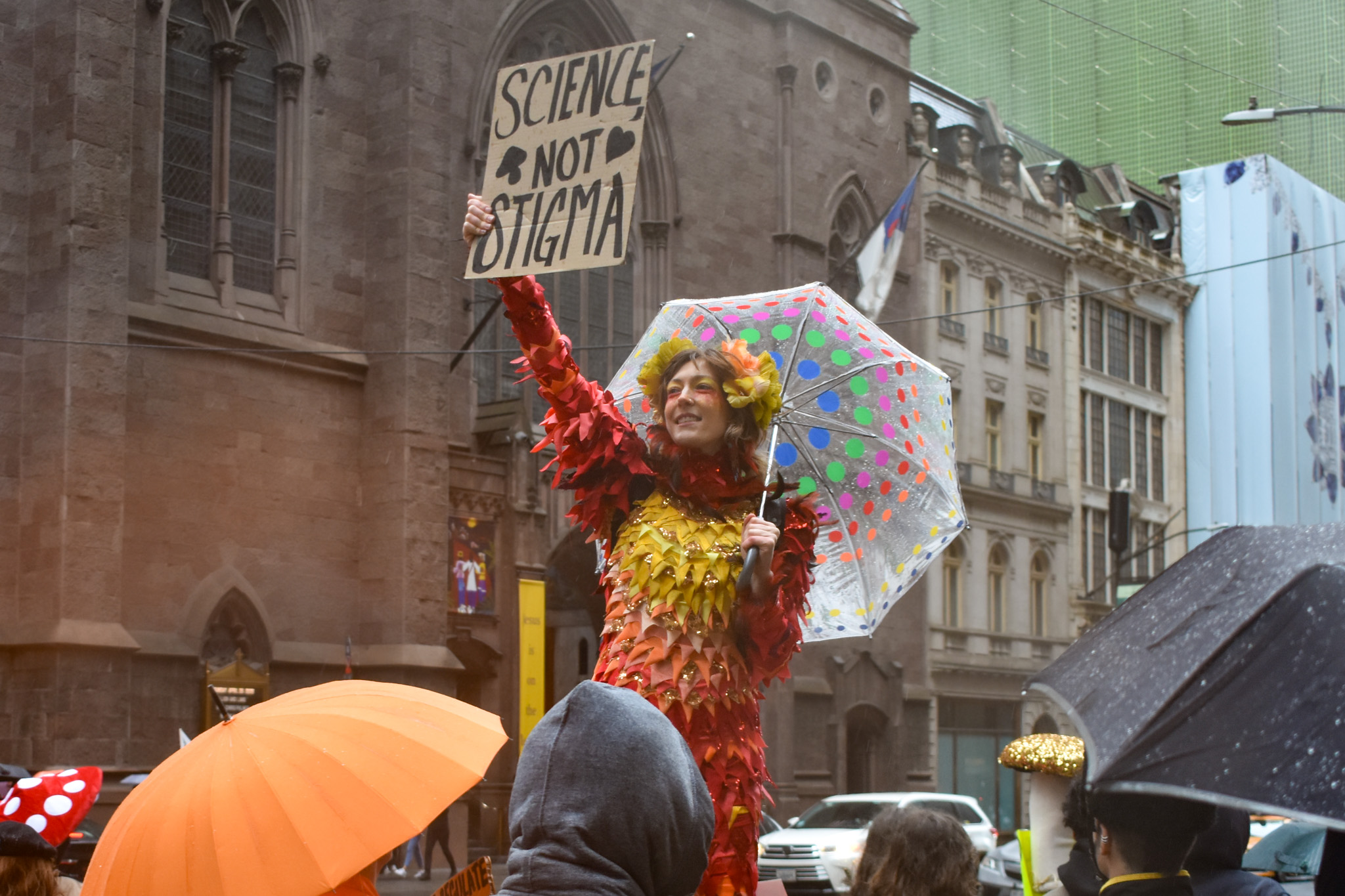
For some, the positives of psychedelic drugs are already well proven. [Credit: Sam Nichols]
On the 83rd anniversary of the first use of LSD, close to 100 people marched through the streets of Manhattan to advocate for better access to the psychedelic substances they say improve lives.
“I’m excited to be part of this psychedelic renaissance of people realizing the benefits of these medicines,” said Dina Bino, one of the demonstrators. “Mental health is such a challenge for our society right now and these medicines bring so much promise.”
“I first took LSD when I was like 17, and it completely changed my life,” said Kat Lakey, the organizer of the demonstration, named the March for Cognitive Liberty.
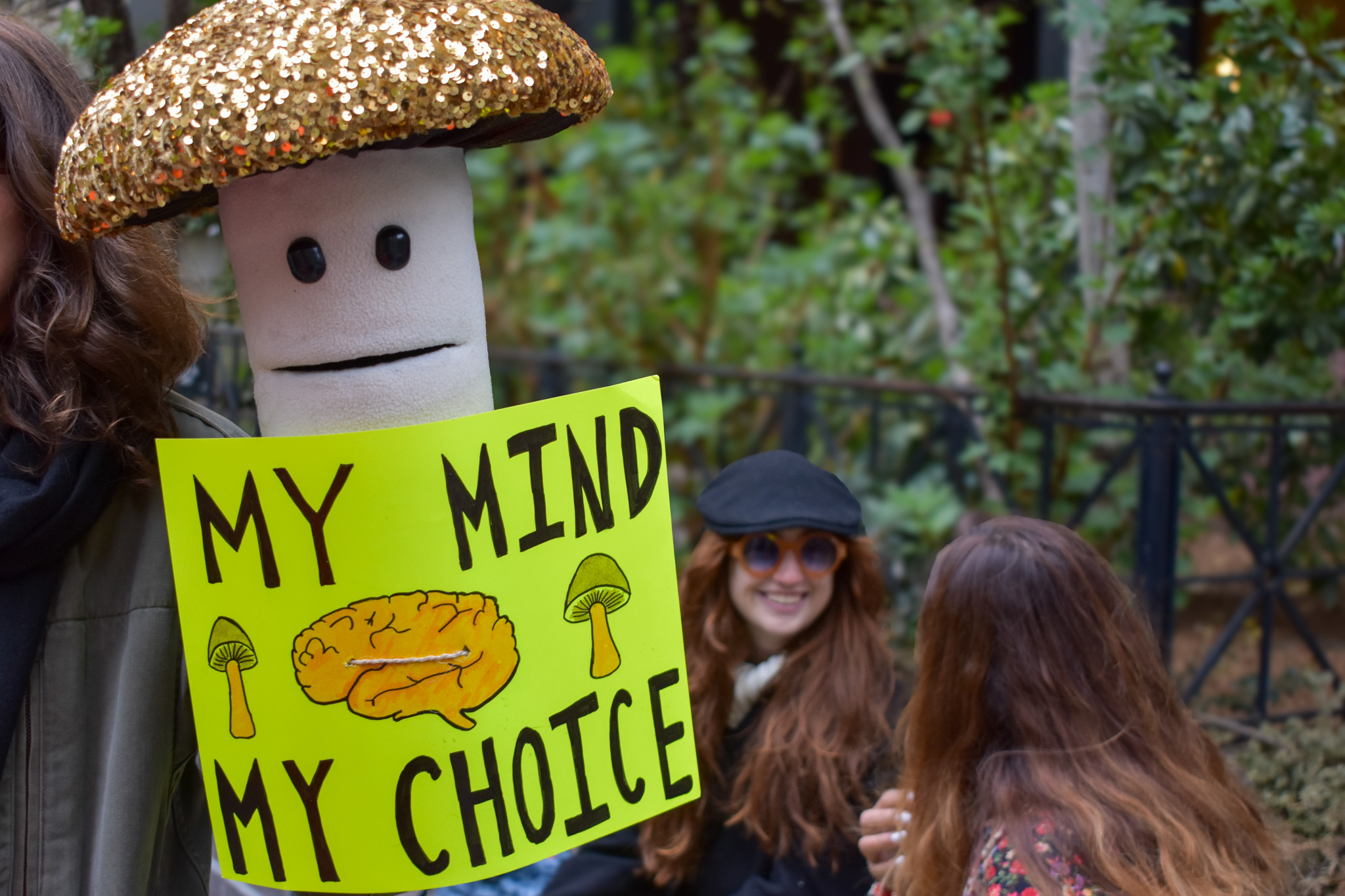
A key focus of the demonstration was improved access to psychedelic drugs like psilocybin. [Credit: Sam Nichols]
The goal of the April 19 march was to advocate for improved access to drugs like MDMA, ketamine and psilocybin and promote destigmatization. “Essentially, people should be allowed to decide what they put into their bodies and what conscious states of mind they want to experience,” Lakey said.
Lakey has organized psychedelic educational and social events over the last four years through the Psychedelic Assembly, a New York-based community group she co-founded in 2022. “I try to advocate for psychedelics because they’ve personally helped me on so many levels,” she said. “And I’ve met at this point, hundreds, if not thousands, of people who’ve had life-changing experiences with them.”
This march was the first of its kind for the advocacy group. One of Lakey’s hopes is this demonstration encourages others to speak openly about their psychedelic use. “There’s psychedelic people in every single aspect of society, from doctors, teachers, lawyers, students,” she said.
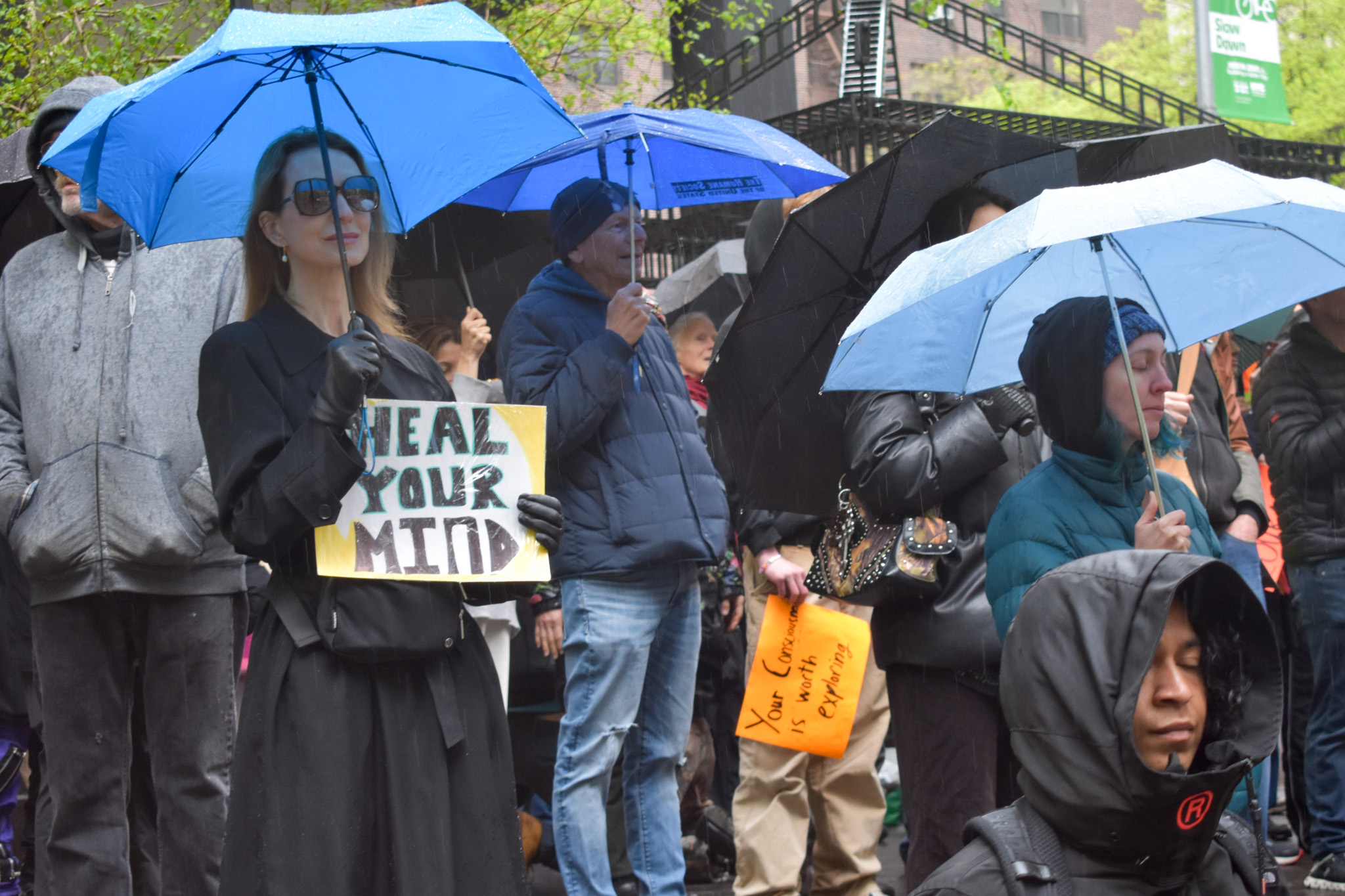
Many joined the demonstration to advocate for the healing nature of psychedelic drugs. [Credit: Sam Nichols]
Psychedelics have recently gained mainstream attention over their promise for treating mental health conditions like post-traumatic stress disorder and treatment-resistant depression. While these therapies have also attracted controversy, many U.S. states and cities are loosening the red tape around these drugs. The day before the demonstration, President Donald Trump signed an executive order to expedite psychedelic therapy access. On April 21, the Department of Health and Human Services said it would commit $139.4 million to “spur new, effective therapies for behavioral health,” which will include research into the safe use of psychedelics.
Despite psychedelic medicine’s potential and support, though, there is also hesitation. The Food and Drug Administration decided in 2024 it would not support MDMA-assisted therapy, citing limited and unreliable data alongside potential risks.
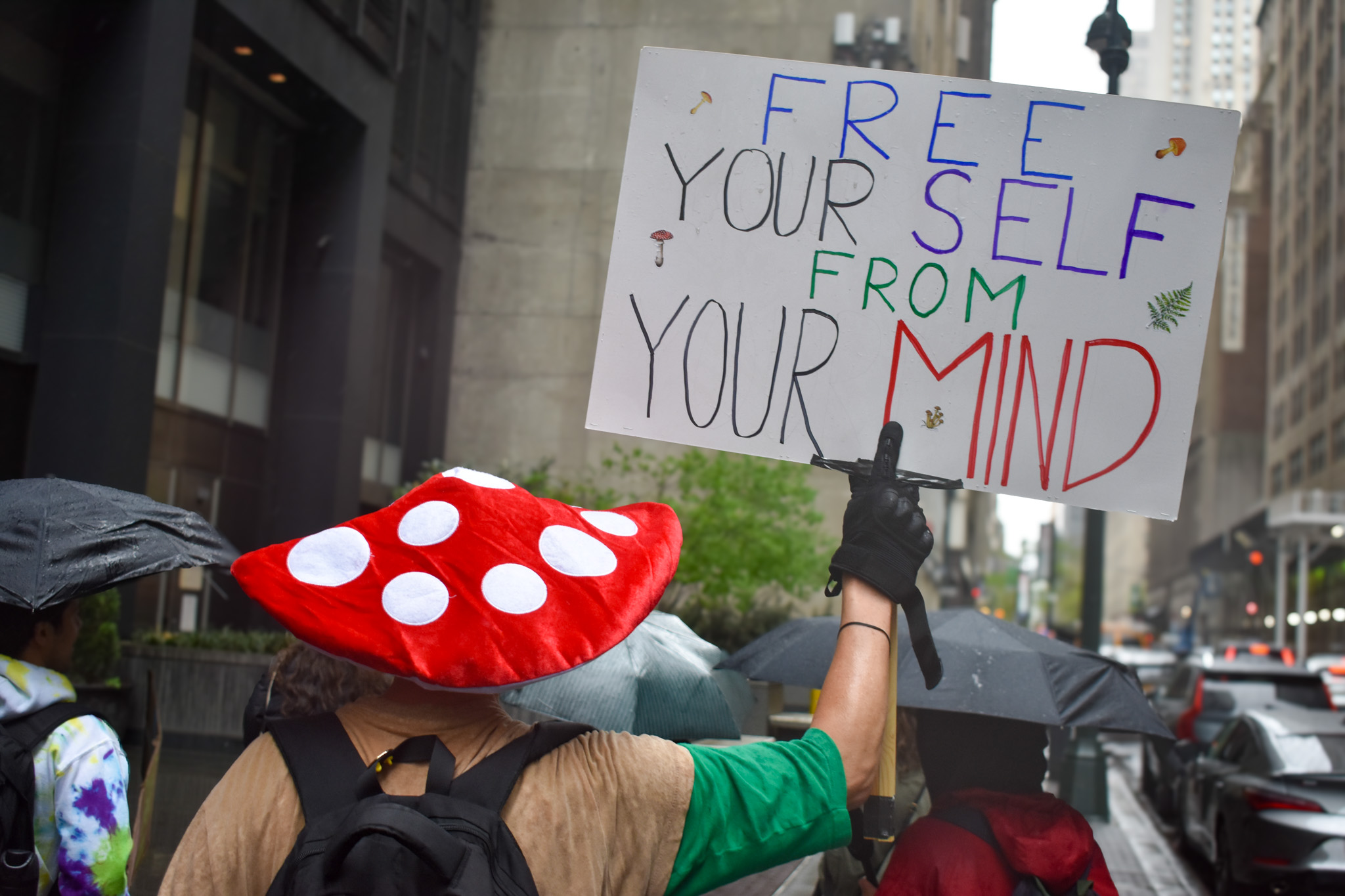
The psychedelic renaissance has attracted mainstream attention in recent years. [Credit: Sam Nichols]
That decision is contentious, said psychiatrist Dr. Julie Holland, who sits on the Psychedelic Assembly’s board of advisors. She argues there’s enough clinical evidence supporting these drugs and that any harm is the result of prohibition. “These medicines have been used sacramentally and spiritually for centuries, if not millennia,” she added. “We don’t need more research. We need educated politicians at this point.”
Others, like Dr. Paul Holtzheimer, a professor of psychiatry at the Dartmouth Geisel School of Medicine who sat on the FDA panel that rejected MDMA-assisted therapy, are less convinced.
“I, for one, would be very much in favor of a change in regulation that made it easier to study these agents, because I think they do have the potential to offer a lot,” he said. “I don’t think we have the randomized control trial data yet on any of these agents to really say that the data is there.”
Whether there is enough evidence or not, some are already convinced psychedelic drugs should be legally accessible. “How can you control something that can grow everywhere?” asked Catalina Luca, a Psychedelic Assembly member who participated in the New York demonstration. “And a lot of these psychedelics are plant medicines.”
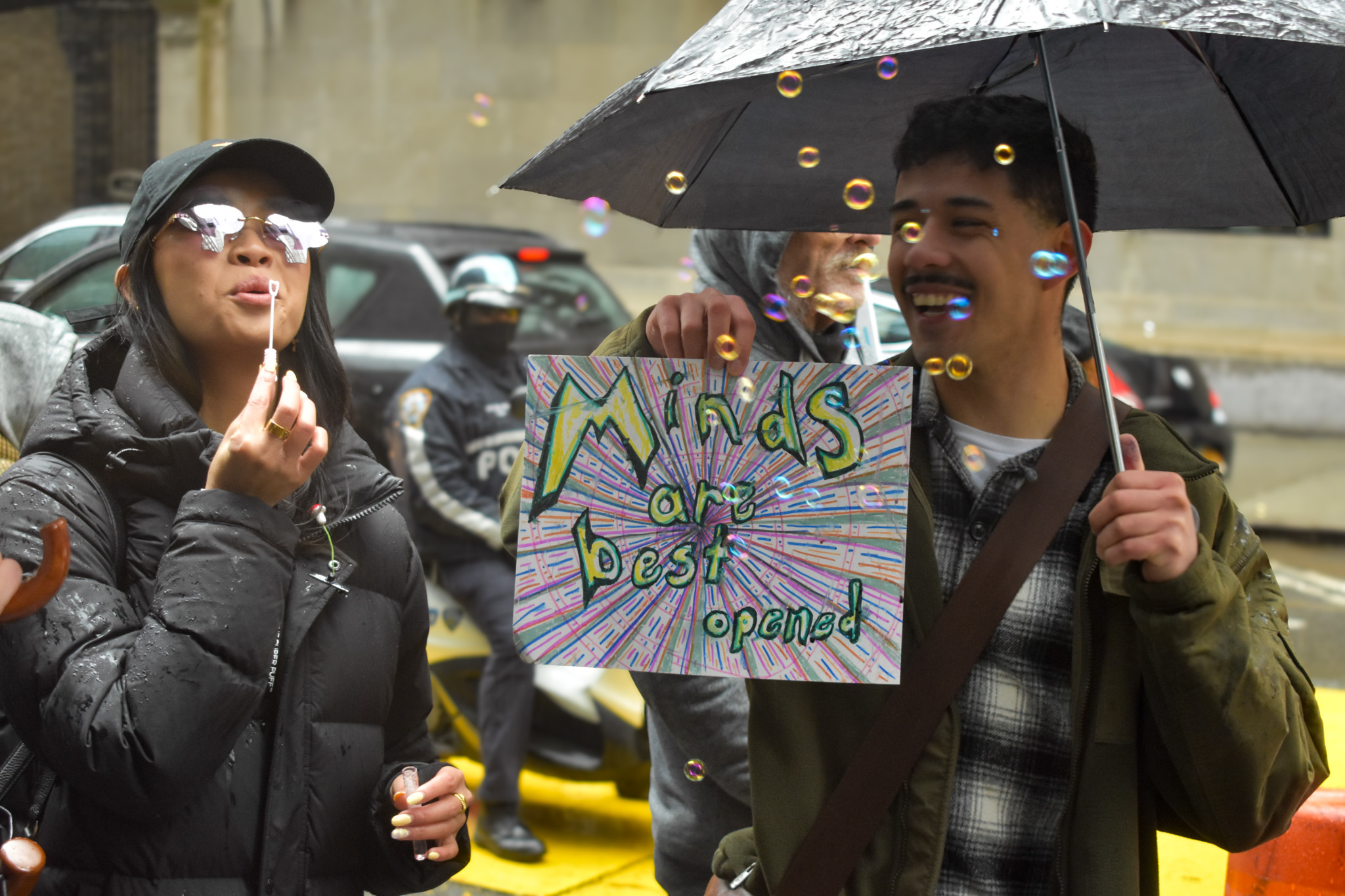
Close to 100 hundred people braved the rain and cold temperatures to march up Fifth Avenue. [Credit: Sam Nic8hols]
Undaunted by rain, marchers wore a spectrum of vibrant colors and held handwritten signs championing psychedelic use as they congregated at Dag Hammarskjöld Plaza before the march.
Zina, who declined to give his last name and was dressed like a psychedelic circus conductor, said he wanted to help raise awareness about these drugs’ healing potential. “I have had experiences that have helped me overcome my own trauma, have helped me to heal relationships, and have helped me to really just live my best life,” he said.
Larry, a 76-year-old who also declined to provide his last name, has been using LSD for over 60 years. He joined the march because “nobody has the right to tell you what you can put in your own brain.”
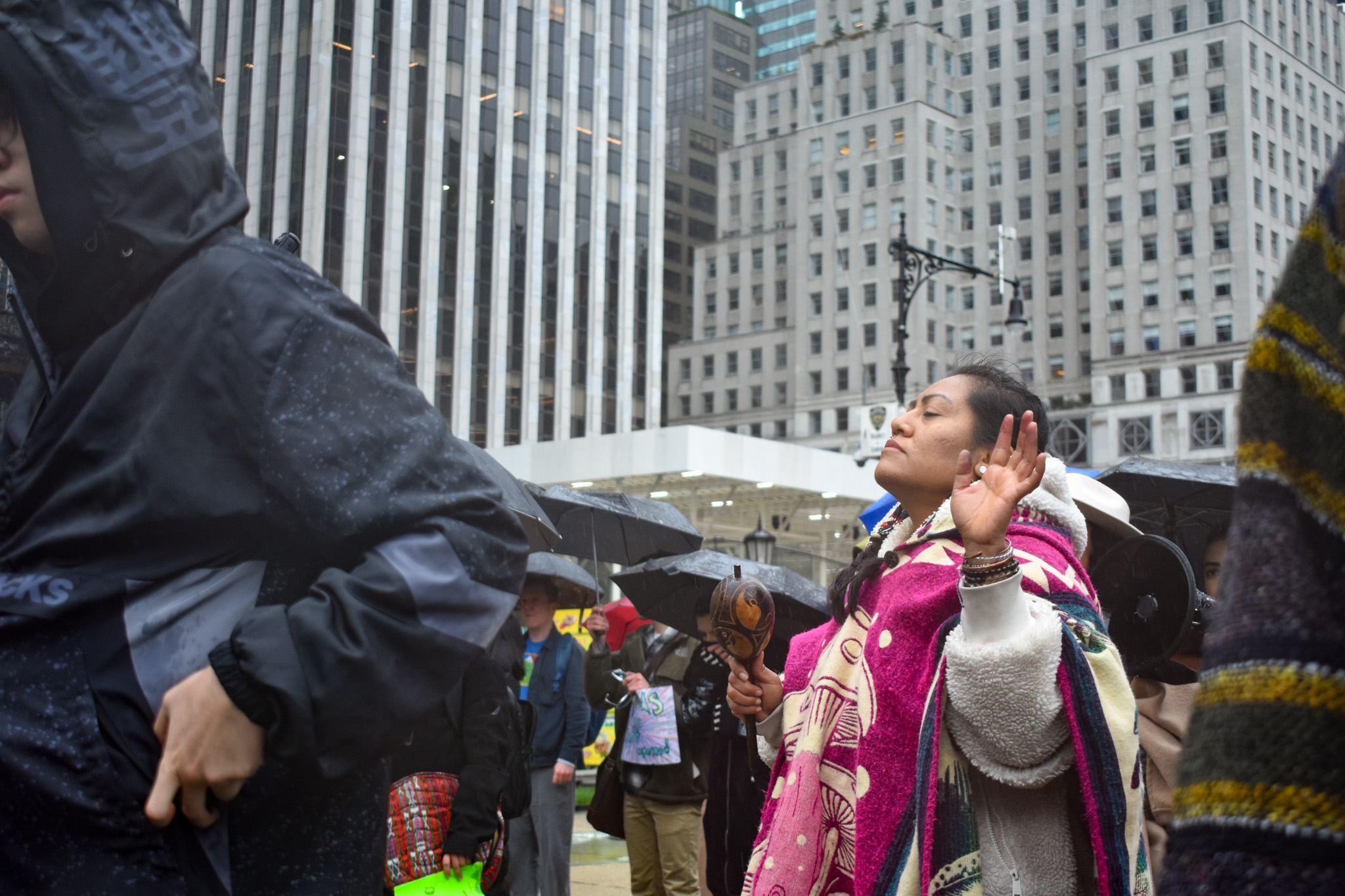
For some, the positives of psychedelic drugs are already well proven. [Credit: Sam Nichols]
Following a brief ceremony, the demonstrators marched in union up Fifth Avenue, flanked by three police bikes. Dodging pedestrians and curious onlookers, they shouted chants like, “My mind, my choice” and “DEA get out the way” before arriving at Pulitzer Plaza in Central Park South. Under the Simon Bolivar Monument, some in attendance gave short speeches, including New York 12th congressional district candidate Laura Dunn. “Let us remember that we are not just fighting for the freedom of our minds, but the freedoms of our rights,” she said.
Others who spoke included psychiatrist Holland and William Leonard Pickard, who was imprisoned in 2000 over what was then considered to be the largest LSD seizure in U.S. history.
“They’re more medicines than drugs, and I want them treated as such,” Holland said in an interview before the march. “But even if they are drugs, I think people should be allowed to manipulate their brain chemistry or their mental states however they see fit — if they’re not hurting anybody.
At the end of the march, Kat Lakey said she was satisfied with how many people were willing to associate themselves with such a public demonstration. That turnout, plus Trump’s executive order, are positive signs for psychedelic drugs, she said. “I think there’s going to be a lot of forward momentum with psychedelics very, very soon.”
Filed To
Share
About the Author

Sam Nichols
Sam Nichols is an Australian writer and journalist. His work, which often covers healthcare, drug policy, addiction medicine and technology, has appeared in the Australian Broadcasting Corporation, SBS and VICE.
1 Comment
Thank you for such a balanced and fair report about these hundred souls who braved bad weather and societal stigma to stand up for their rights and for these medicines that are here to help us at a time when we need them the most.